

Celtic Salt UK: Where to Buy It and What to Look For
What Celtic sea salt (sel gris) is, how it's harvested, how to spot the real thing, how it compares with Himalayan, flaky and table salt, and how to cook and store it.
Quick answer
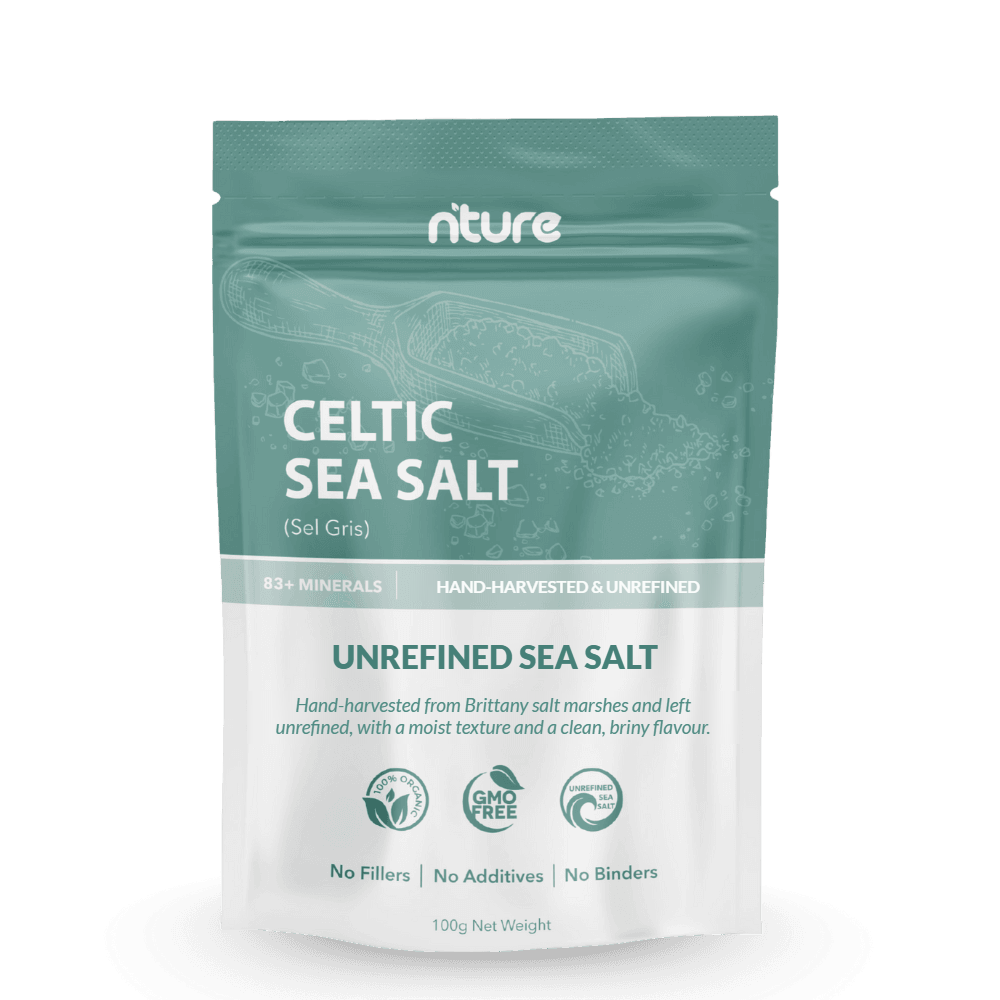
Celtic salt, also called Celtic sea salt or sel gris ("grey salt"), is unrefined sea salt raked by hand from clay-lined salt marshes on the coast of Brittany, France, and dried by the sun and wind. In the UK it's sold in supermarkets, health food shops, delis and online. To get the real thing, look for a named Brittany origin, light grey, slightly moist crystals, a single ingredient with no anti-caking agents, and the words "unrefined" or "hand-harvested". It's still mostly sodium chloride, so use it like any salt, within the NHS limit of 6g a day.
Key takeaways
- What it is: grey, moist, coarse sea salt from Brittany's tidal salt marshes.
- Colour: the grey comes from the clay of the salt ponds; very white "Celtic salt" has usually been washed or refined.
- Check the label: origin, harvest method, ingredients (salt only) and grain size.
- In the kitchen: great for finishing, roasting, brining and seasoning cooking water.
- Iodine: it isn't iodised, so get iodine from foods such as milk, yoghurt, fish and eggs.
Celtic salt at a glance
- Other names
- Celtic sea salt, sel gris, grey sea salt, Brittany sea salt
- Where it's from
- Salt marshes on France's Atlantic coast, especially Guérande, Noirmoutier and Île de Ré
- How it's made
- Seawater evaporated by sun and wind in clay ponds, then raked by hand
- Colour and texture
- Light grey, slightly damp, coarse or fine
- Flavour
- Clean, briny, slightly mineral
- Main component
- Sodium chloride, with small amounts of other minerals and moisture
- Iodised?
- No
- UK daily salt limit
- 6g for adults (about a level teaspoon), from all foods
What is Celtic salt?
"Celtic salt" is the name commonly used in the UK for sel gris, the grey sea salt of Brittany in north-west France, a region with Celtic roots. "Celtic Sea Salt" is also a brand name used by one supplier, but most UK shops use the term for any grey Brittany sea salt.
Unlike table salt, which is refined until it's almost pure white sodium chloride and often has anti-caking agents added, Celtic salt is unrefined. It keeps a little moisture and small amounts of other minerals from seawater, which give it its grey colour, damp texture and slightly mineral taste. It is still mostly sodium chloride.
How Celtic salt is harvested
- Seawater flows in: at high tide, seawater is channelled into a series of shallow clay-lined ponds.
- Sun and wind do the work: as the water moves from pond to pond it slowly evaporates and becomes saltier.
- Crystals form: in the final ponds, salt crystals settle on the clay bed.
- Hand raking: salt workers, called paludiers, rake the crystals by hand with long wooden tools, usually in summer.
- Drying and packing: the salt is piled to drain and dry naturally, then sieved and packed, either as coarse crystals or ground finer.
The fine white crystals skimmed from the surface of the water are fleur de sel, a more delicate and expensive finishing salt from the same marshes.
Where to buy Celtic salt in the UK
- Supermarkets: most large supermarkets stock grey sea salt in the herbs and spices or world foods aisle, often in coarse and fine versions.
- Health food shops and delis: usually carry a wider choice of sizes and grains.
- Online: specialist food sellers offer the most choice, including bulk bags. Check the origin and reviews carefully, as quality varies.
- Direct from UK brands: smaller brands, including Nture, pack Brittany sel gris in the UK.
What to look for when buying Celtic salt
- A named origin: Brittany, or a specific area such as Guérande, Noirmoutier or Île de Ré.
- Harvest method: "hand-harvested", "unrefined" and "sun and wind dried".
- Colour: light grey to grey. Bright white salt sold as Celtic salt has usually been washed or refined.
- Texture: slightly moist, clumping crystals are normal. Very dry, free-flowing salt may have been kiln-dried or contain anti-caking agents.
- Ingredients: just "sea salt". No anti-caking agents (such as E535 or E536) or added flavourings.
- Grain size: coarse for cooking water, brines and grinders; fine for baking and the table.
- Packaging: a resealable pouch or jar to keep moisture in and dirt out.
- Labels and certifications: some French salts carry the Nature & Progrès label or a protected-origin mark. These are useful signs, but not essential.
Coarse, fine, light grey and fleur de sel
| Type | What it's like | Best for |
|---|---|---|
| Coarse sel gris | Large, moist grey crystals | Pasta and vegetable water, brines, roasting, salt crusts |
| Fine sel gris | Ground, slightly moist | Everyday cooking, baking, table use |
| Light grey | Paler crystals, sometimes lightly sieved | All-purpose cooking |
| Fleur de sel | Delicate white flakes skimmed from the surface | Finishing steaks, salads, chocolate and caramel |
Celtic salt vs Himalayan, flaky and table salt
| Celtic salt | Himalayan pink salt | Flaky sea salt | Table salt | |
|---|---|---|---|---|
| Source | Atlantic seawater, Brittany | Rock salt mined in Pakistan | Seawater, often UK | Mined or sea salt |
| Processing | Unrefined, sun-dried | Mined, crushed | Evaporated by heating | Refined, often with anti-caking agents |
| Colour | Grey | Pink | White | White |
| Texture | Moist, coarse or fine | Dry, coarse or fine | Light, crunchy flakes | Fine and free-flowing |
| Flavour | Briny, mineral | Mild | Clean, crisp | Sharp |
| Best for | Cooking, roasting, brining | Grinders, cooking | Finishing | Baking, everyday use |
All of these salts are mostly sodium chloride. The differences are in flavour, texture and how they're made, and the extra minerals in unrefined salts are present in very small amounts at the quantities we eat. Choose the one you enjoy cooking with.
How to use Celtic salt
- Season cooking water: a small handful of coarse sel gris in pasta, potato or vegetable water.
- Roast vegetables and meat: scatter coarse crystals over potatoes, root vegetables or a joint before roasting.
- Finish dishes: crush a few crystals between your fingers over steak, eggs, tomatoes or salads.
- Brines and salt crusts: coarse Celtic salt is ideal for brining chicken or pork and for baking fish in a salt crust.
- Baking: use fine sel gris, or dry coarse crystals in a low oven (about 100°C for 20 minutes) and grind them.
- Grinders: moist crystals can clog a grinder; dry them first or use a mortar and pestle.
Because coarse, moist crystals pack loosely, a teaspoon of coarse Celtic salt weighs less than a teaspoon of fine table salt. If you're following a recipe, weigh salt or switch to fine sel gris for accuracy.
How to store Celtic salt
Keep Celtic salt in a sealed glass, ceramic or wooden container, away from steam. Avoid metal containers, as damp salt can corrode them. It's normal for sel gris to stay slightly moist and to clump; just break it up with a spoon. Salt doesn't go off, but follow the best-before date on the pack.
How much salt is too much?
Celtic salt is still salt. The NHS advises adults to have no more than 6g of salt a day, about a level teaspoon, and that includes the salt already in foods like bread, cheese, cured meats and ready meals. Children should have less. Gram for gram, Celtic salt provides a similar amount of sodium to other salts, so swapping to it doesn't mean you can use more.
If you've been advised to limit salt, for example because of high blood pressure or kidney disease, follow that advice for Celtic salt too, and speak to your GP before making changes such as adding salt to drinking water.
Celtic salt FAQs
Where can I buy Celtic salt in the UK?
In most large supermarkets, health food shops and delis, and online from specialist food sellers and UK brands. Look for a named Brittany origin and unrefined, hand-harvested grey crystals.
What is Celtic salt called in the UK?
It's usually called Celtic salt or Celtic sea salt, and sometimes sel gris or grey sea salt, the French name for unrefined grey salt from Brittany.
How can I tell if Celtic salt is real?
Real sel gris is light grey and slightly moist, with a named Brittany origin and only salt in the ingredients. Very white, dry, free-flowing salt with anti-caking agents isn't traditional Celtic salt.
Which is better, Himalayan salt or Celtic salt?
Neither is better nutritionally; both are mostly sodium chloride. Celtic salt is moist and briny, ideal for cooking and roasting; Himalayan salt is dry and mild, good in grinders. Choose by taste and texture.
What does Celtic salt do to your body?
Like any salt, it provides sodium, which the body needs in small amounts. Its other minerals are present only in small quantities. Keep your total salt intake within the NHS limit of 6g a day.
Who should not use Celtic salt?
Anyone advised to limit salt, for example because of high blood pressure, heart or kidney disease, should treat Celtic salt like any other salt and follow their doctor's advice.
Does Celtic salt contain iodine?
No. It isn't iodised. In the UK, iodine mainly comes from milk and dairy foods, fish and eggs.
Why is Celtic salt wet?
It's naturally dried by sun and wind rather than kiln-dried, so it keeps a little moisture. This is normal and a sign it hasn't been heavily processed.