

What Is a Honey Pack? Ingredients, Taste and How to Use One
What's actually inside a honey pack, what it tastes like, how to use one, how to spot an unsafe product, and what UK shoppers should check before buying.
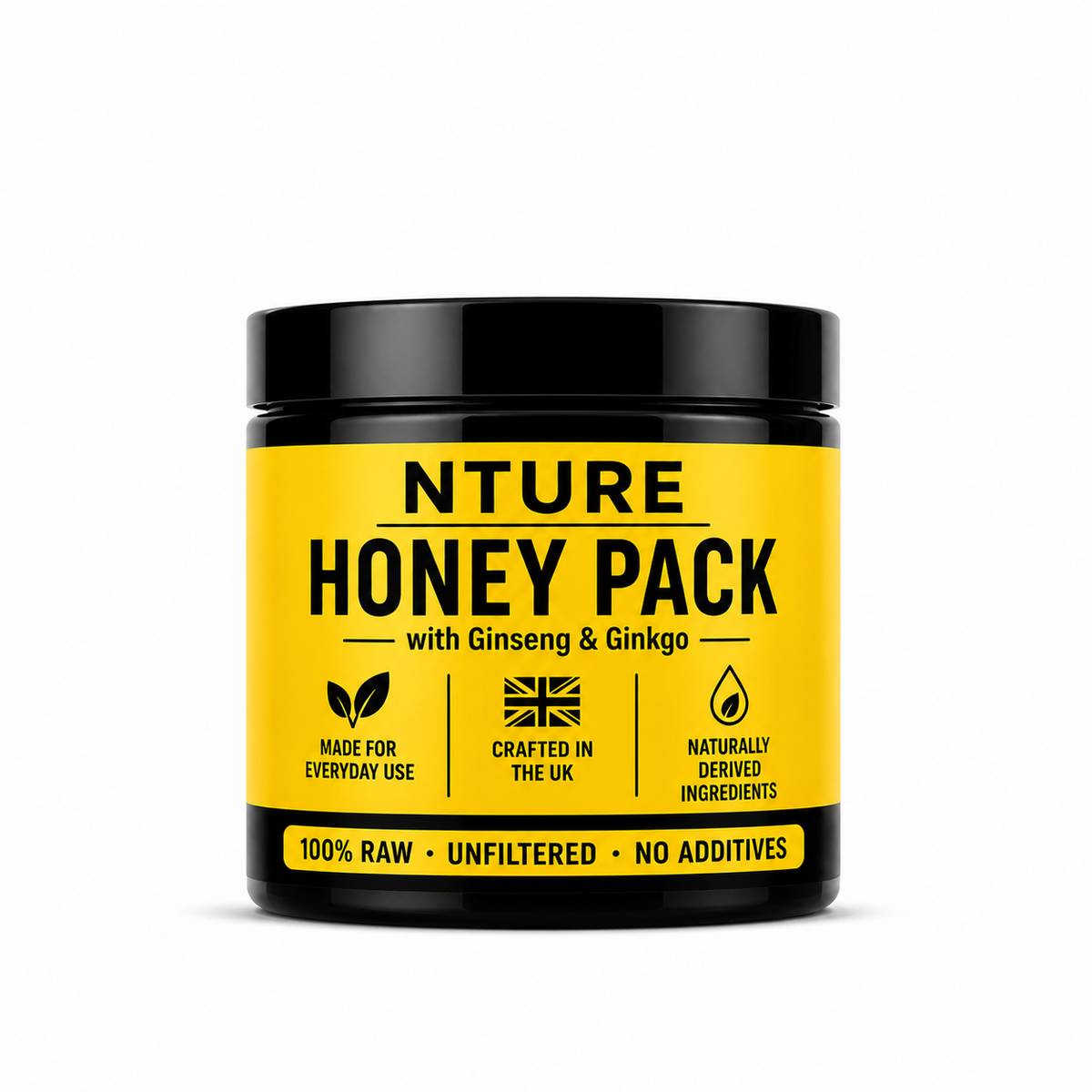
Quick answer
A honey pack is a single serving of honey, often blended with botanicals such as ginseng or royal jelly, sold in a small sachet or as a jar measured out by the teaspoon. The phrase covers two things: everyday honey sachets like the ones in cafés, and blended "honey packs" sold online with big performance promises. Some imported packs of the second kind have been found to contain undeclared prescription medicines, so always buy from a brand that lists every ingredient and is made in a registered UK facility.
Key takeaways
- Two meanings: plain honey sachets (about 7–20g each) and honey blended with botanicals.
- Typical ingredients: honey plus herbs such as ginseng, royal jelly, bee pollen or tongkat ali.
- Taste: sweet and thick, with an earthy or slightly bitter edge when herbs are added.
- Safety: US and French authorities have found hidden prescription drugs in some imported packs.
- In the UK: foods and supplements can't legally contain medicines or make unauthorised health claims, so check the label carefully.
Honey packs at a glance
- What it is
- A single serving of honey, plain or blended with botanicals
- Formats
- Squeezy sachets (7–20g), snap packs, or a jar used by the teaspoon
- Common additions
- Ginseng, royal jelly, bee pollen, ginkgo, muira puama, tongkat ali
- Taste
- Sweet, floral, sometimes earthy or bitter from the herbs
- Energy per teaspoon
- About 21 kcal and 6g sugar (7g of honey)
- Not suitable for
- Babies under 1, under-18s (blends), anyone allergic to bee products
- Storage
- Cool, dry, out of sunlight; no need to refrigerate
- Diet
- Not vegan (honey is a bee product)
Energy and sugar: USDA FoodData Central, honey (FDC 169640), per 7g teaspoon.
Search "honey pack" and you'll find two very different products side by side: the little squeezy honey portions you get with a cup of tea, and glossy foil sachets with bold promises on the front. This guide explains what's actually inside each, how to use them, and how to avoid the unsafe ones.
Two kinds of honey pack
| Plain honey sachet | Blended honey pack | |
|---|---|---|
| What's in it | Honey only | Honey plus herbs or bee products |
| Typical size | 7–20g single portion | 10–20g sachet, or a jar dosed by the teaspoon |
| Where you see it | Cafés, hotels, lunchboxes, gym bags | Online shops, health stores, social media |
| Main use | Sweetening tea, porridge, yoghurt | A daily spoonful of honey with botanicals |
| What to check | Honey origin and type | Full ingredient list, maker's address, no medical promises |
On social media, "honey pack" almost always means the second kind. These products became popular in the US in the 2020s and are now widely sold online in the UK.
What's in a honey pack?
Honey is always the base: it carries the other ingredients, keeps without a fridge and makes herbs easier to take. Common additions include:
- Korean ginseng (Panax ginseng): a root used in traditional Korean and Chinese cooking and tonics. Earthy and slightly bitter.
- Royal jelly and bee pollen: bee products that add a tangy, slightly sour note.
- Ginkgo (Ginkgo biloba): a leaf extract from one of the world's oldest tree species.
- Muira puama (Ptychopetalum olacoides): the bark of an Amazonian shrub, used traditionally in Brazil.
- Tongkat ali (Eurycoma longifolia): a Southeast Asian root, common in imported packs.
A trustworthy product names every ingredient, ideally with amounts. Vague wording such as "proprietary herbal blend" or "secret formula" is a warning sign.
What does a honey pack taste like?
Mostly like honey: thick, sweet and floral. Blends with ginseng or herbs have an earthy, woody or slightly bitter finish, and royal jelly adds a faint tang. Raw honey can be cloudy or grainy because it hasn't been heat-treated, which is normal. Our raw wildflower honey is a good example.
How to use a honey pack
- Read the label first. Follow the serving size on the pack. For most jars that's one teaspoon a day.
- Take it straight from the sachet or spoon, or let it dissolve on your tongue.
- Stir it in to warm (not boiling) water, herbal tea, porridge, yoghurt or a smoothie.
- Don't double up. More isn't better, and herbal blends aren't designed to be taken by the handful.
- Count the sugar. A teaspoon of honey has about 6g of sugar. UK guidance is no more than 30g of free sugars a day for adults, and honey counts towards that.
Are honey packs safe?
Plain honey sachets are an ordinary food. Blended packs are a different story, because quality varies hugely between sellers:
- Hidden medicines: the US Food and Drug Administration has repeatedly found undeclared prescription drugs, mainly sildenafil and tadalafil, in imported honey packs, with warnings from 2017 onwards.
- Seizures in Europe: in 2025 French customs reported seizing tonnes of so-called "aphrodisiac honey", much of it containing undeclared medicines.
- Why it matters: hidden medicines can interact with prescribed drugs, especially nitrates for heart conditions, and the dose is unknown.
- Herb interactions: some botanicals, such as ginkgo, aren't suitable alongside blood-thinning medicines. Check with a pharmacist if you take any regular medication.
- Allergies: anyone allergic to bees, pollen or royal jelly should avoid honey packs.
Never give honey in any form to a baby under 12 months. If you feel unwell after taking any honey pack, stop and speak to a pharmacist or call NHS 111. In the UK you can report suspected problems with a product through the MHRA's Yellow Card scheme.
How to spot an unsafe honey pack
- Medical or performance promises. In the UK, food can't claim to treat a condition. Claims like "works in 30 minutes" or "lasts for days" are a red flag.
- No full ingredient list, or ingredients listed only in another language.
- No UK or EU business address on the pack or website.
- Sold on marketplaces at rock-bottom prices, often in boxes of identical gold or black sachets.
- Brand names that have appeared in regulator warnings, such as Royal Honey VIP, Kingdom Honey and Black Horse.
- Effects that feel drug-like. Honey and herbs don't act like a medicine. If a product does, it may contain one.
Buying honey packs in the UK
Honey packs are legal to buy in the UK when they're genuine food. Under GB food law a food supplement must list its ingredients, give the name and address of the business responsible for it, show a best-before date and carry no claims that it treats or prevents illness. Any product containing a medicine such as sildenafil is an unlicensed medicine, not a food.
Look for:
- a short, complete ingredient list with named botanicals;
- where the honey comes from and whether it's raw;
- a UK manufacturer or importer you can contact;
- clear warnings (under-18s, pregnancy, medication, bee allergy);
- a sensible serving size and a best-before date.
Sachets vs jars
| Single sachets | Jar | |
|---|---|---|
| Convenience | Grab-and-go for bags and travel | Stays at home; use a clean spoon |
| Portion control | Fixed per sachet | Measured by the teaspoon |
| Packaging | One wrapper per serving | One recyclable jar |
| Cost per serving | Usually higher | Usually lower |
| Best for | Travel, gym, office | A daily routine |
How to store a honey pack
Keep honey packs sealed, cool, dry and out of direct sunlight. There's no need to refrigerate them; cold speeds up crystallisation. Raw honey naturally crystallises over time. To make it runny again, stand the jar in a bowl of warm water for a few minutes. Don't microwave it. Use a clean, dry spoon and follow the best-before date.
Honey pack FAQs
What is a honey pack?
A single serving of honey, either plain or blended with botanicals such as ginseng or royal jelly, sold as a small sachet or measured by the teaspoon from a jar.
What does a honey pack do for a man?
Blended honey packs are often marketed to men with performance promises, but there's no good evidence that honey or the usual herbs work that way. Some imported packs have been found to contain hidden prescription drugs, which is why they're risky. If you have concerns about your sexual health, speak to your GP or a pharmacist.
How long do honey packets take to kick in?
Honey and herbs are food, not medicine, so there's nothing to "kick in". A honey product that causes fast, drug-like effects may contain an undeclared medicine. Stop using it and speak to a pharmacist.
Can you get honey packs in the UK?
Yes. Plain honey sachets are sold in supermarkets, and blended honey packs are sold online and in health shops. Choose UK brands that list every ingredient and give a UK address, and avoid unlabelled imports.
Are honey packs legal in the UK?
Genuine honey packs that are properly labelled food are legal. Products containing medicines such as sildenafil or tadalafil are unlicensed medicines and shouldn't be sold as food.
Who shouldn't use a honey pack?
Babies under 12 months should never have honey. Blended packs aren't for under-18s, and anyone pregnant, breastfeeding, taking regular medication or allergic to bee products should check with a pharmacist first.
Does a honey pack need to go in the fridge?
No. Store it somewhere cool and dry, away from sunlight. The fridge makes honey crystallise faster.