

Turmeric and Black Pepper: Why They're Paired and How to Use Them
What curcumin and piperine are, what the research on absorption actually shows, how much pepper to add, easy ways to cook with the pair, and who should check before taking turmeric supplements.
Quick answer
Turmeric and black pepper are paired because of absorption. Turmeric's main colour compound, curcumin, is poorly absorbed on its own. Black pepper contains piperine, and in a small 1998 study, taking 20mg of piperine with 2g of curcumin raised the amount of curcumin reaching the blood by around 2,000% (about 20 times). In the kitchen, a pinch of pepper and a little fat with your turmeric does the same job. There are no authorised health claims for turmeric in the UK, and people on medication, pregnant or with liver or gallbladder problems should check with a GP or pharmacist before taking supplements.
Key takeaways
- Why pair them: piperine slows the breakdown of curcumin in the gut and liver, so more of it is absorbed.
- The famous figure: "up to 2,000%" comes from one small study using high doses of extracts, not everyday cooking amounts.
- In cooking: a pinch of black pepper (about ¼ teaspoon per teaspoon of turmeric) plus oil, ghee, milk or yoghurt.
- Turmeric powder is only around 3% curcumin, so a teaspoon contains roughly 90mg.
- Supplements: follow the label, take with food, and check first if you take medicines.
Turmeric and black pepper at a glance
- Turmeric
- Dried root of Curcuma longa, a member of the ginger family
- Key compound
- Curcumin (with other curcuminoids), about 2–5% of turmeric powder
- Black pepper
- Dried berries of Piper nigrum
- Key compound
- Piperine, roughly 5–9% of black pepper; it gives pepper its heat
- 1 tsp turmeric
- About 3g powder, roughly 90mg curcumin
- Curcumin limit (as a food colour, E100)
- Acceptable daily intake of 3mg per kg of body weight (about 210mg for a 70kg adult)
- Absorbs best with
- Black pepper and a source of fat
- UK health claims
- None authorised for turmeric or curcumin
Turmeric has been a staple of South Asian cooking for thousands of years, and it's rarely used alone: curries, dals and golden milk almost always include black pepper and a fat such as ghee, oil or milk. Modern research has helped explain why that traditional combination makes sense.
What are curcumin and piperine?
Curcumin is the bright yellow pigment in turmeric and the compound most studied. It's also used as a natural food colouring (E100). Turmeric powder is only a few percent curcumin by weight, so the spice itself is mostly other plant material, fibre and essential oils.
Piperine is the compound that gives black pepper its bite. Black peppercorns contain roughly 5–9% piperine. Supplements often use a standardised black pepper extract, sometimes sold under the trade name BioPerine, which is about 95% piperine.
Why black pepper helps turmeric absorb
On its own, curcumin is a tricky compound for the body to use:
- It doesn't dissolve well in water, so little of it is absorbed from the gut.
- It's broken down quickly in the gut wall and liver, mainly by a process called glucuronidation, then cleared from the body.
Piperine slows that breakdown, so more curcumin survives long enough to reach the bloodstream. Because curcumin is fat-soluble, eating it with some fat helps too, which is why traditional recipes cook turmeric in oil or ghee.
| What happens | |
|---|---|
| Turmeric alone | Curcumin is poorly absorbed and quickly broken down |
| Turmeric + fat | Curcumin dissolves better, helping absorption |
| Turmeric + black pepper (+ fat) | Piperine slows curcumin's breakdown, so more reaches the blood |
What the research actually shows
The "2,000%" figure you'll see everywhere comes from a 1998 study published in Planta Medica (Shoba and colleagues). Healthy volunteers took 2g of curcumin with or without 20mg of piperine. With piperine, blood levels of curcumin were about 20 times higher (a 2,000% increase in bioavailability). In rats, the increase was much smaller, at around 154%.
A few things are worth knowing before taking that number at face value:
- It was small: only a handful of volunteers took part.
- The doses were high: 2g of pure curcumin is the amount in roughly 65g of turmeric powder.
- It measured absorption, not health outcomes. Higher blood levels don't by themselves show any effect on the body.
Since then, other approaches to absorption have been developed too, such as curcumin bound to fats (phytosomes) or tiny particles (micelles). Black pepper remains the cheapest and simplest, and the one you can use in your own kitchen.
How much black pepper to add
There's no official ratio, but these are sensible starting points:
| Use | Turmeric | Black pepper |
|---|---|---|
| Everyday cooking | 1 tsp ground turmeric | ¼ tsp freshly ground black pepper |
| Golden milk (1 mug) | ½ tsp | A good pinch |
| Research ratio | 2g curcumin | 20mg piperine (100:1) |
| Supplements | Follow the amounts on the label | |
Freshly ground pepper has more aroma; piperine itself is fairly stable, so pre-ground pepper works too. Always add a little fat: oil, ghee, butter, coconut milk, dairy milk or yoghurt.
Ways to cook with turmeric and black pepper
- Tarka (tempering): warm ghee or oil, add cumin or mustard seeds, then turmeric and black pepper for a few seconds before pouring over dal.
- Golden milk: warm 250ml milk or oat milk with ½ tsp turmeric, a pinch of black pepper, a pinch of cinnamon or ginger and a little honey. Whisk well.
- Roast vegetables: toss cauliflower, squash or potatoes in olive oil, turmeric, black pepper, salt and cumin, then roast at 200°C.
- Scrambled eggs or tofu: add a pinch of each to the pan with butter or oil.
- Rice: stir ½ tsp turmeric, a pinch of pepper and a knob of butter into the water for golden rice.
- Soups and stews: lentil, chicken or vegetable soups all take turmeric well; season with pepper at the end.
- Dressings and marinades: mix turmeric and pepper with yoghurt, lemon and garlic for chicken, fish or paneer.
Turmeric stains, so use a metal spoon and wipe worktops quickly.
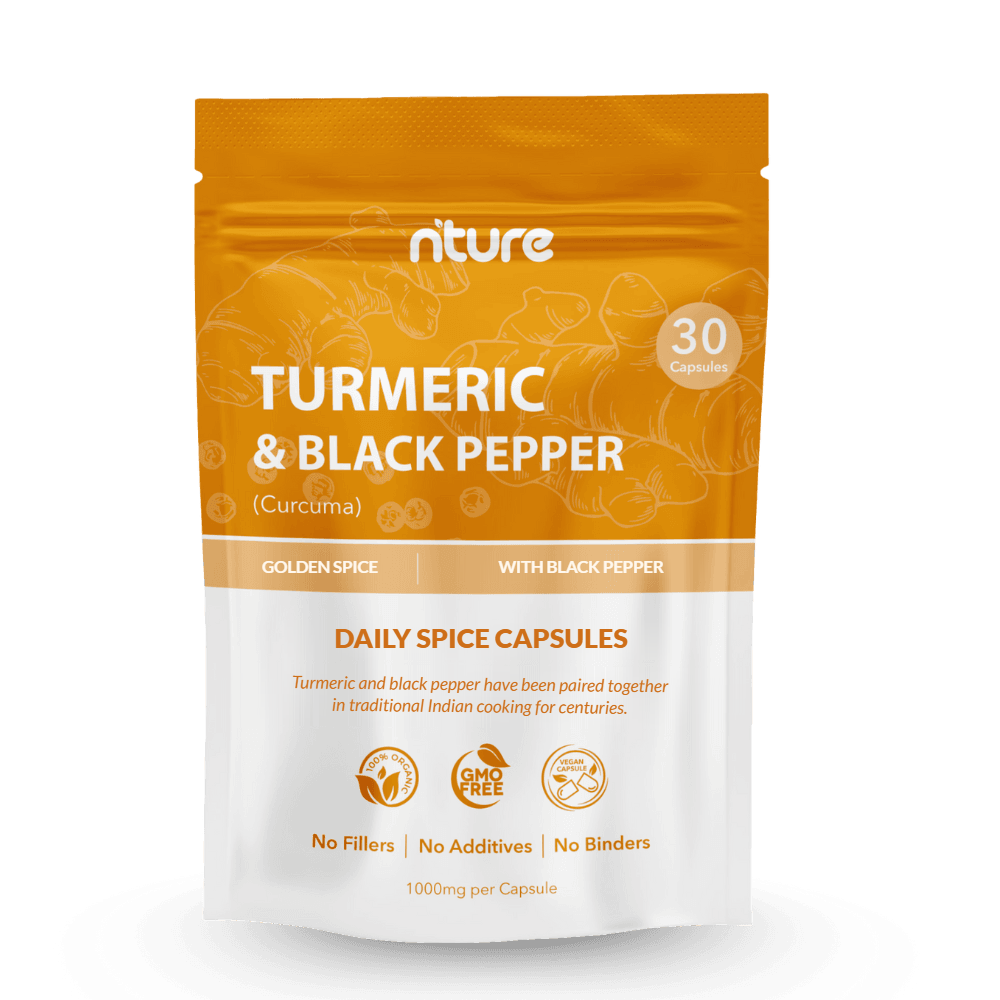
Turmeric with black pepper supplements
If you'd rather not rely on your cooking, turmeric supplements with black pepper are widely sold in the UK. When comparing them, look at:
- What's in each capsule: turmeric root powder, a standardised curcumin extract (often 95% curcuminoids), or both.
- The black pepper source: ground pepper or a standardised piperine extract, and how much.
- Daily serving: stick to the amount on the label and don't combine several turmeric products.
- Testing and origin: batch testing for purity and heavy metals, and clear country of manufacture.
- Take it with a meal: food that contains some fat helps absorption and may reduce stomach upset.
Who should check first
Turmeric as a spice in food is used safely by millions of people every day. Concentrated supplements are different, and a small number of people have had liver problems linked to turmeric and curcumin supplements, including products with black pepper extract. Regulators such as Australia's Therapeutic Goods Administration have issued warnings about this. Speak to a GP or pharmacist before taking a turmeric supplement if you:
- Take medication, especially blood thinners (such as warfarin), medicines for diabetes, or any prescribed drug. Piperine can change how some medicines are absorbed.
- Have liver or gallbladder problems, including gallstones.
- Are pregnant or breastfeeding.
- Have an operation coming up.
Stop taking a supplement and seek medical advice if you notice yellowing of the skin or eyes, dark urine, unusual tiredness or tummy pain. High doses can also cause stomach upset, nausea or loose stools in some people.
For more detail, see our guides to medications that may interact with turmeric and turmeric side effects.
What can be said about benefits in the UK?
You'll find plenty of websites describing what turmeric "does" for the body. In the UK, health claims on foods and supplements must be authorised and listed on the GB Nutrition and Health Claims Register, and no health claims have been authorised for turmeric or curcumin. Much of the research is early, uses concentrated extracts at high doses, or was done in the lab rather than in people.
What can be said with confidence is that turmeric is a flavourful, colourful spice with a long culinary history, and that black pepper and fat help your body absorb more of its curcumin.
Turmeric and black pepper FAQs
Why is black pepper added to turmeric?
Black pepper contains piperine, which slows the breakdown of curcumin in the gut and liver. In a 1998 study, 20mg of piperine taken with 2g of curcumin increased curcumin absorption by about 2,000%.
How much black pepper should I add to turmeric?
For cooking, about ¼ teaspoon of black pepper per teaspoon of turmeric, plus a little oil, ghee or milk. For supplements, follow the label.
What are the benefits of taking turmeric with black pepper?
The main reason to combine them is absorption: more curcumin reaches the bloodstream. There are no authorised health claims for turmeric or curcumin in the UK, and much of the research is still early.
Who should not take turmeric and black pepper?
Check with a GP or pharmacist before taking a turmeric supplement if you're pregnant or breastfeeding, have liver or gallbladder problems, are due to have surgery, or take medication such as blood thinners or diabetes medicines. Using turmeric as a spice in food is different from taking concentrated supplements.
When is the best time to take turmeric and black pepper?
With a meal that contains some fat, at whatever time of day suits you. Food helps absorption and may reduce stomach upset.
Why do some people avoid black pepper in turmeric?
Because piperine increases absorption, it can also change how some medicines are absorbed, and a small number of liver problems have been linked to high-absorption turmeric supplements. People on medication or with liver conditions should get advice first.
Does cooking destroy curcumin?
Short cooking is fine, and frying turmeric briefly in oil, as in a tarka, helps it dissolve. Very long, high-heat cooking breaks some curcumin down, so add it partway through rather than at the start of a long braise.
Can I add black pepper to a turmeric latte?
Yes. A good pinch per mug is plenty, and the milk provides the fat. Cinnamon, ginger and a little honey balance the peppery note.