

Halal Beef Tallow: What to Check Before You Buy
What makes beef tallow halal, how to check a certificate yourself, the label details that matter for cooking, and the red flags that should make you look elsewhere.
Quick answer
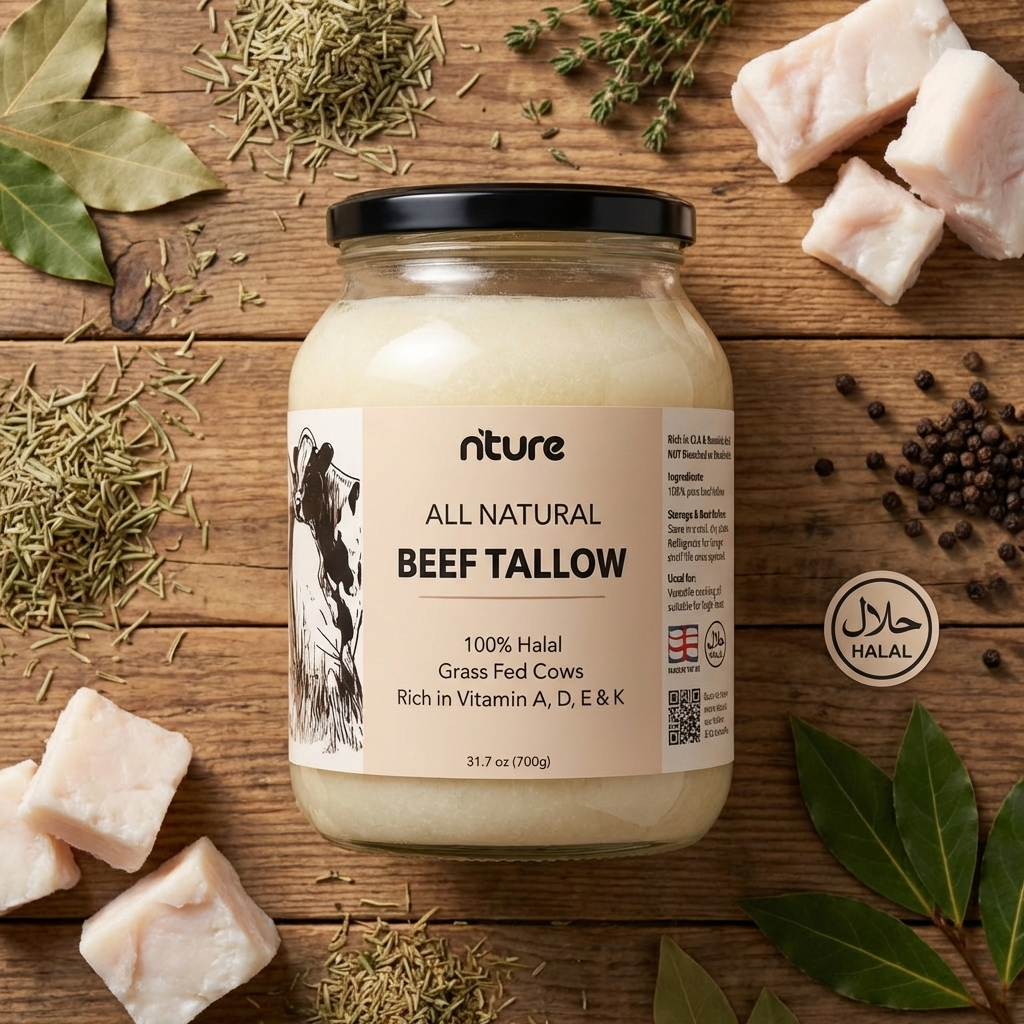
Beef tallow is halal only when the cattle were slaughtered according to Islamic rules and nothing haram was added or mixed in during rendering and packing. Because tallow is just rendered fat, you can't tell by looking at it. Before you buy, check that the brand names its halal certifier, that the certificate covers this product or its fat supplier, and that you can confirm it in the certifier's own directory. A green "halal" badge on its own isn't proof.
Key takeaways
- Source matters most: halal status comes from how the animal was slaughtered, not from the rendering.
- Ask "certified by whom?": a named body and a certificate you can check beat any logo.
- Stunning varies: UK certifiers differ on whether pre-slaughter stunning is acceptable, so pick one that matches your view.
- Read the ingredients: it should say beef fat (or beef tallow) and little else.
- Check the facility: pork fat processed on the same line is a real cross-contamination risk.
Halal beef tallow at a glance
- What it is
- Beef fat (usually suet) that's been slowly melted and strained
- Halal if
- Cattle slaughtered by Islamic rules, no haram additives or contamination
- Main UK certifiers
- Halal Monitoring Committee (HMC), Halal Food Authority (HFA), and others
- How to verify
- Certifier's directory of approved companies, certificate number and expiry date
- Should contain
- Beef fat only; sometimes a natural antioxidant such as rosemary extract
- Typical smoke point
- Around 200–205°C, suitable for roasting and frying
- Texture
- Firm and creamy white to pale yellow at room temperature
- Typical UK price
- Roughly £20–£40 per kg for grass-fed halal tallow
What makes beef tallow halal
Cattle are a halal animal, so beef fat isn't forbidden in itself. What decides whether a jar of tallow is halal is everything that happened before it reached the jar. Three things need to be right:
- The slaughter: the animal must be slaughtered by a Muslim, with the name of Allah invoked, by a swift cut to the throat that drains the blood (known as dhabihah or zabiha). Fat from cattle that weren't slaughtered this way isn't halal, even if the cattle themselves were well raised.
- Nothing haram added: the finished tallow mustn't contain pork fat (lard), alcohol-based flavourings or other non-halal ingredients.
- No cross-contamination: the fat should be rendered, filtered and packed on equipment that isn't shared with pork or other non-halal products, or that's properly cleaned between runs under a certifier's rules.
Rendering itself doesn't change the status. Heating fat that wasn't halal to begin with doesn't make it halal, and properly sourced halal fat stays halal after rendering.
Tallow, suet and dripping: which are you buying?
These words get used loosely, and some "halal tallow" listings are actually raw suet. Knowing the difference stops you paying for the wrong thing.
| Raw suet | Beef tallow | Beef dripping | |
|---|---|---|---|
| What it is | Hard, raw fat from around the kidneys | Suet or other beef fat, melted and strained clean | Fat collected from roasting beef, often with meat juices |
| Texture | Crumbly, with membrane | Smooth, firm, pale | Softer, often brown jelly underneath |
| Flavour | Raw, meaty | Mild and clean | Strong, roast beef |
| Keeps | Days in the fridge, or freeze | Months in a sealed jar | Weeks in the fridge |
| Best for | Suet pastry, puddings, rendering at home | Frying, roasting, baking, and skincare | Flavouring roasts and gravy |
For the full comparison, see our guide to beef dripping vs tallow.
The 8-point buyer's checklist
Run through these before you add a jar to your basket. A reputable brand should be able to answer every one, either on the product page or by email.
- Is a halal certifier named? Look for the name of a specific body, not just "halal certified" or "certified by a recognised authority".
- Does the certificate cover this product? A certificate for a brand's chicken or a butcher's shop doesn't automatically cover tallow made from bought-in fat. Ask whether it covers the tallow itself or the abattoir that supplies the fat.
- Is it in date? Halal certificates are usually renewed every year. An expired certificate isn't valid.
- What's the slaughter method? If it matters to you, ask whether the cattle were stunned before slaughter (see below).
- Where were the cattle raised and slaughtered? "UK sourced" or "British beef" is easier to trace than "packed in the UK" or "produced in the EU".
- Where is it rendered? Ask whether the facility also handles pork or lard, and how lines are kept separate.
- What's in the ingredients? It should say beef fat or beef tallow. Anything else should be named and halal.
- Is there a batch number and best-before date? They show the product is traceable if anything goes wrong.
UK halal certifiers and the stunning question
There's no single government halal standard in the UK. Instead, several independent organisations inspect and certify abattoirs, producers and brands, and their rules differ. The biggest difference is pre-slaughter stunning:
- Halal Monitoring Committee (HMC) is a UK charity that inspects and certifies halal products. It's known for certifying meat only from animals that were not stunned before slaughter, and for placing its own monitors in approved premises.
- Halal Food Authority (HFA) certifies food, cosmetics and pharmaceuticals. It's known for accepting certain forms of reversible stunning, where the animal would recover if not slaughtered.
- Other bodies certify in the UK too, each with their own standards.
Scholars and communities hold different views on stunning, so the "right" certifier depends on what you follow. The point of checking is simply that you know which standard your tallow meets.
How to verify a halal certificate yourself
- Find the certifier's name on the label, product page or certificate.
- Go to the certifier's own website, not a link or PDF supplied by the seller.
- Search its directory of approved suppliers, brands or premises for the company name. HMC, for example, publishes lists of approved meat suppliers, non-meat suppliers and brands.
- Match the details: the company name, address, product scope, certificate number and expiry date should all line up.
- If you can't find it, ask the certifier directly. Most will confirm whether a company is currently approved.
If a brand won't tell you who certifies its tallow, treat that as a "no" until it does.
Reading the label: what else to check
Once you're happy with the halal side, the label tells you how good the tallow itself is.
- Ingredients: "100% beef fat" or "beef tallow" is ideal. A small amount of rosemary extract as a natural antioxidant is fine if you don't mind it.
- Grass-fed: fat from grass-fed cattle is often more yellow and slightly richer in flavour. It's a sourcing preference rather than a halal requirement.
- Smoke point: well-strained tallow typically starts to smoke at around 200–205°C, high enough for roasting potatoes and shallow frying. See our guide to cooking with beef tallow.
- Colour and smell: it should be white to pale yellow with a mild, clean smell. Grey colour or a sour, rancid smell means it's old or badly stored.
- Packaging: glass jars protect flavour and don't leach. Check delivery reviews for cracked jars.
- Cooking or skincare grade: if you plan to use tallow on your skin, look for a product made and labelled as a cosmetic. Food tallow and tallow balms are regulated differently.
What you should pay
Prices vary a lot, so compare the price per kilo, not the jar price. As a rough guide for the UK in late 2026:
| Product type | Typical price per kg | Notes |
|---|---|---|
| Raw halal suet | £10–£15 | Needs rendering at home |
| Halal tallow, larger jars or tubs | £20–£25 | Best value if you cook with it often |
| Halal tallow, small jars | £30–£40 | Good for trying a brand |
| Halal tallow balm (skincare) | £150+ | Whipped, often with added oils; not for cooking |
A price far below this range for "grass-fed, halal" tallow is worth questioning. Halal slaughter and grass-fed beef both cost more.
Red flags
- "Halal" appears only in the product title or as a badge, with no certifier anywhere.
- The seller can't say where the cattle were slaughtered or where the fat was rendered.
- The certificate is for a different company, a different product or has expired.
- The ingredients include unnamed "fats", "flavourings" or "shortening".
- The listing makes medical promises, such as curing skin conditions or helping weight loss. Food and cosmetics aren't allowed to make claims like these in the UK.
Storing halal tallow
Keep the jar sealed in a cool, dark cupboard, away from the cooker. Always use a clean, dry spoon so water or food crumbs don't get in, as these make fat spoil faster. A fridge extends its life further. Tallow you've already used for deep frying can be strained through a fine sieve and reused a few times, but discard it once it darkens, smells strong or smokes at lower temperatures.
Halal beef tallow FAQs
Is beef tallow halal?
Beef tallow is halal if it comes from cattle slaughtered according to Islamic rules and nothing haram is added or mixed in during processing. Tallow from conventionally slaughtered cattle isn't halal.
How can I tell if beef tallow is really halal?
Check that the brand names a halal certifier, then search that certifier's own directory for the company. The certificate should cover the tallow or its fat supplier and be in date.
Does rendering make non-halal fat halal?
No. Rendering melts and filters the fat but doesn't change its source. Halal status depends on how the animal was slaughtered.
Is tallow the same as suet?
No. Suet is the raw, hard fat from around the kidneys. Tallow is suet or other beef fat that's been melted and strained into a smooth, shelf-stable cooking fat.
Is halal beef tallow stunned or non-stunned?
It depends on the certifier. Some UK certifiers, such as HMC, certify only non-stunned slaughter, while others, such as HFA, accept certain reversible stunning methods. Ask the brand which applies.
Can I use halal beef tallow on my skin?
Many people use tallow as a moisturiser, but for skin use choose a product made and labelled as a cosmetic. Patch-test first and stop if irritation occurs.
Where can I buy halal beef tallow in the UK?
From halal butchers, specialist online shops and brands that sell it directly. Whichever you choose, use the checklist above to confirm the certifier before buying.
How long does halal beef tallow last?
Well-strained tallow in a sealed jar keeps for many months in a cool cupboard and longer in the fridge. Follow the best-before date on the jar.