

How to Use Moringa Powder: Recipes and Tips
How much moringa powder to use, what it tastes like, ten easy ways to add it to food and drinks, how to hide the grassy taste, and how to store and buy it in the UK.
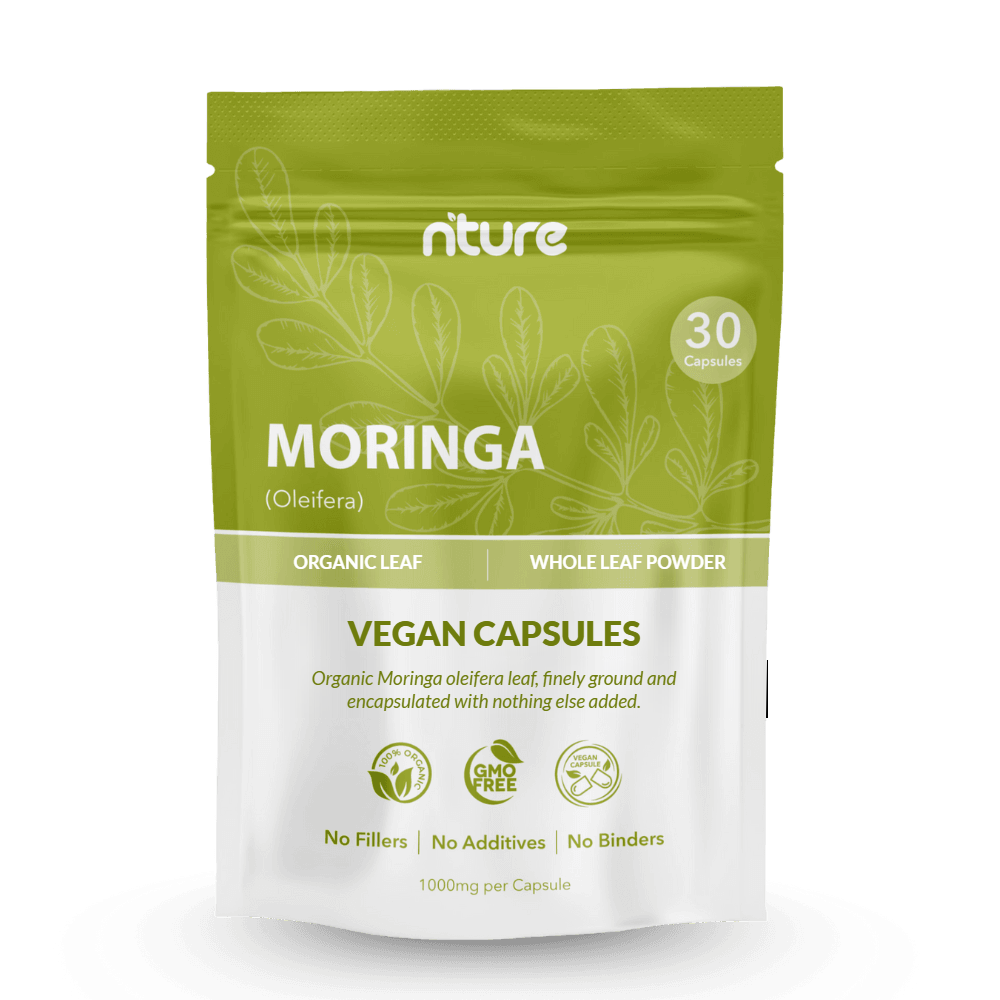
Quick answer
Moringa powder is dried, ground moringa leaf. Start with ½ teaspoon a day and build up to 1–2 teaspoons (about 2–5g). It tastes earthy and grassy, like spinach or matcha, so it works best stirred into smoothies, yoghurt, porridge, soups, dips and dressings. Add it at the end of cooking rather than boiling it, keep it in an airtight jar away from light, and if you don't like the taste, moringa capsules give you the same leaf powder without it.
Key takeaways
- How much: ½ tsp to start, then 1–2 tsp a day (a level teaspoon is roughly 2g).
- Best uses: smoothies, lattes, porridge, yoghurt, soups, pesto, hummus and salad dressings.
- Taste: earthy, grassy and slightly bitter. Banana, citrus, ginger and cocoa hide it well.
- Heat: stir it in at the end; long boiling dulls the colour and flavour.
- Storage: airtight, dark, cool. Fresh powder is bright green; brownish powder is stale.
Moringa powder at a glance
- What it is
- Dried, finely ground leaves of the Moringa oleifera tree
- Other names
- Drumstick tree, horseradish tree, "sahjan" or "murungai" in South Asia
- Taste
- Earthy and grassy, like spinach or matcha, with a slight bitterness
- Typical serving
- 1–2 level teaspoons (about 2–5g)
- Per 100g (typical label)
- About 300 kcal, 24g protein, 28g fibre
- Best with
- Banana, mango, pineapple, lemon, ginger, cocoa, coconut
- Shelf life
- Around 12 months unopened; use within a few months of opening
- Diet
- Vegan, gluten-free (check the label for cross-contamination)
Nutrition per 100g varies by brand and harvest; check the label on your pack.
Moringa has been eaten as a leafy vegetable across India, Africa and Southeast Asia for generations: the fresh leaves go into curries, dals and soups, and the long pods are cooked as "drumsticks". In the UK it's usually sold as a dried green powder. This guide is all about using it well in everyday food.
What is moringa powder?
Moringa powder is made by drying the leaves of the Moringa oleifera tree at a low temperature, then grinding them into a fine green powder. Good powder is just one ingredient: moringa leaf. Nothing is added.
Like other dried leafy greens, it's concentrated. A typical label shows around 24g of protein and 28g of fibre per 100g, though you'll only use a few grams at a time.
What does moringa taste like?
Moringa tastes earthy and grassy, somewhere between spinach, green tea and matcha, with a slightly bitter, peppery finish. (Its roots taste of horseradish, which is where the name "horseradish tree" comes from.) On its own in water it can taste "green". Mixed into food, a teaspoon is easy to hide.
How much moringa powder to use
| Stage | Amount | Roughly |
|---|---|---|
| First week | ½ level teaspoon a day | About 1g |
| Everyday | 1–2 level teaspoons a day | About 2–5g |
| In a recipe for 4 | 1–2 teaspoons in the whole dish | Spread across servings |
Start small: moringa is high in fibre, and jumping straight to a big spoonful can upset some stomachs. If your pack gives a serving size, follow that.
10 easy ways to use moringa powder
- Smoothies. The easiest way in. Blend 1 tsp with banana, mango or pineapple and a handful of spinach.
- Green latte. Whisk ½–1 tsp into warm (not boiling) oat milk with a little honey or maple syrup and a pinch of cinnamon.
- Porridge and overnight oats. Stir in once cooked, with berries and nut butter.
- Yoghurt. Mix into natural or Greek yoghurt with honey and granola.
- Soups, curries and dals. Stir 1–2 tsp into the pot just before serving, the way moringa leaves are used in South Asian cooking.
- Pesto. Add 1 tsp to basil, garlic, pine nuts, parmesan and olive oil.
- Hummus and guacamole. ½–1 tsp per bowl; lemon and garlic mask the taste.
- Salad dressing. Shake ½ tsp with olive oil, lemon juice, mustard and honey.
- Eggs. Whisk a pinch into scrambled eggs or an omelette.
- Baking. Add 1–2 tsp to pancake batter, muffins or bread dough for a green colour and earthy note.
Three simple moringa recipes
Tropical moringa smoothie (1 glass)
Blend 1 frozen banana, 100g frozen mango or pineapple, 200ml milk or coconut water, a squeeze of lime and 1 tsp moringa powder until smooth.
Moringa oat latte (1 mug)
Warm 250ml oat milk until steaming but not boiling. In the mug, mix 1 tsp moringa powder with a splash of the warm milk to a smooth paste, then whisk in the rest with 1 tsp honey and a pinch of cinnamon or ginger.
Moringa lemon dressing (4 servings)
Shake together 4 tbsp olive oil, 2 tbsp lemon juice, 1 tsp Dijon mustard, 1 tsp honey, ½ tsp moringa powder, salt and pepper. Use on salads, grain bowls or roast vegetables.
Tips for hiding the taste
- Pair it with sweet fruit: banana, mango and pineapple are the best match.
- Add acid: lemon or lime juice brightens the grassy note.
- Add warmth: ginger, cinnamon, cocoa and vanilla all work.
- Make a paste first: mix with a little liquid before adding the rest so it doesn't clump.
- Don't boil it: long, high heat makes it taste more bitter and turns it khaki.
Moringa powder vs capsules
| Powder | Capsules | |
|---|---|---|
| Taste | Earthy and grassy | None |
| How you take it | Mixed into food and drinks | Swallowed with water |
| Measuring | By the teaspoon | Fixed amount per capsule (e.g. 1000mg) |
| Travel | Messier | Easy to carry |
| Best for | People who cook and blend | People who want it quick and tasteless |
Two 1000mg capsules contain about 2g of moringa leaf powder, roughly a level teaspoon.
Who should check first
- Pregnant or breastfeeding: avoid unless your midwife or GP says otherwise.
- Children: moringa supplements aren't intended for children.
- Taking medication: ask a pharmacist or GP first, especially if you take medicine for blood sugar, blood pressure or your thyroid.
- Sensitive stomach: start with ½ teaspoon; the fibre can take getting used to.
Moringa is a food, not a medicine, and works best as part of a varied, balanced diet.
How to choose moringa powder in the UK
- One ingredient: "100% moringa (Moringa oleifera) leaf". No fillers or added sugar.
- Bright green colour: a vivid green shows fresh, gently dried leaf. Dull olive or brown means old or overheated.
- Leaf, not seed or pod: make sure it's leaf powder for cooking.
- Organic and traceable: look for an organic logo and the country of origin.
- Lab testing: good brands test each batch for purity and contaminants.
- Packaging: a resealable, light-proof pouch or tin.
How to store moringa powder
Keep moringa powder in an airtight, light-proof container in a cool, dry cupboard. Light, heat, air and moisture all fade its colour and flavour. Use a dry spoon so it doesn't clump, and don't keep it above the cooker. Most packs carry a best-before date about a year ahead; once opened, use it within a few months for the best taste. If it smells musty or has turned brown, replace it.
Moringa powder FAQs
How do you use moringa powder?
Stir ½–2 teaspoons into smoothies, yoghurt, porridge, soups, dips or dressings. Add it at the end of cooking rather than boiling it, and mix it to a paste with a little liquid first so it doesn't clump.
How much moringa powder should I take a day?
Start with ½ teaspoon a day and build up to 1–2 level teaspoons (about 2–5g). Follow the serving size on your pack.
What does moringa powder taste like?
Earthy and grassy, similar to spinach or matcha, with a slight bitterness. Sweet fruit, citrus, ginger and cocoa hide it well.
Can you put moringa powder in hot drinks?
Yes, but use warm rather than boiling liquid. Very hot water makes it taste more bitter.
What happens if I take moringa powder every day?
For most adults, a teaspoon or two a day is simply another leafy green in the diet. Start small, as the fibre can upset sensitive stomachs, and check with a GP or pharmacist if you're pregnant, breastfeeding or taking medication.
Who should not take moringa powder?
People who are pregnant or breastfeeding, children, and anyone taking regular medication should check with a GP or pharmacist first.
Which is better, chia seeds or moringa powder?
They're different foods. Chia seeds are seeds high in fibre and fat that thicken liquids; moringa is a dried leafy green used in small amounts for flavour and colour. Many people use both.
How should I store moringa powder?
In an airtight, light-proof container in a cool, dry cupboard. Use it within a few months of opening, and replace it if it turns brown or smells musty.