

Moringa Capsules vs Moringa Powder: Which Should You Choose?
How moringa capsules and powder compare on taste, amount, cost and convenience, how to read capsule labels (including "10,000mg" claims), and what to check before you buy in the UK.
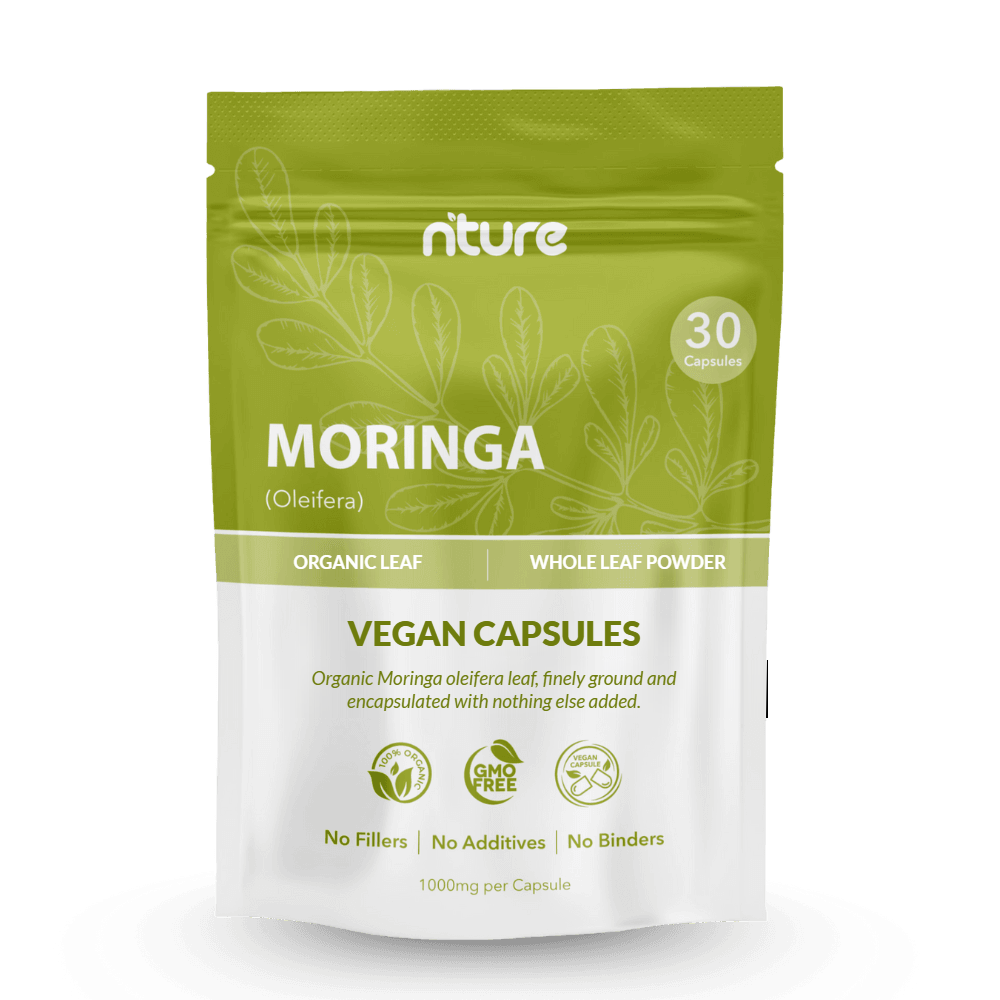
Quick answer
Moringa capsules and moringa powder are usually the same thing: dried, ground moringa leaf. The difference is how you take it. Powder is cheaper per gram and can go into food and drinks, but it tastes earthy and grassy. Capsules have no taste, are pre-measured and easy to carry, but cost more per gram. Two 1000mg capsules hold about 2g of leaf powder, roughly one level teaspoon. When buying capsules, check whether they contain leaf powder or an extract, because "10,000mg" on a label usually means an extract equivalent, not 10g of moringa in the capsule.
Key takeaways
- Same leaf, different format: most capsules are simply moringa leaf powder in a vegan shell.
- Choose powder if you cook, blend smoothies and want the lowest cost.
- Choose capsules if you dislike the taste, want a fixed amount or take it on the go.
- Read the label: mg per capsule, capsules per serving, and powder vs extract.
- Check first if you're pregnant, breastfeeding or take medication.
Moringa capsules vs powder at a glance
| Moringa powder | Moringa capsules | |
|---|---|---|
| What it is | Dried, ground leaf | Dried, ground leaf (or extract) in a capsule |
| Taste | Earthy, grassy, slightly bitter | None |
| Typical daily amount | ½–2 tsp (about 1–5g) | 1–4 capsules (about 0.35–2g of leaf powder) |
| Measuring | By the spoon | Fixed amount per capsule |
| Cost per gram | Lower | Higher (you pay for encapsulation) |
| Uses | Smoothies, lattes, soups, dips, baking | Swallowed with water and food |
| Travel | Messy; needs a spoon and a drink | Easy to carry |
| Shelf life once opened | Best used within a few months | Usually more stable; capsules protect the powder from air |
| Best for | People who like cooking and blending | People who want it quick and tasteless |
Are moringa capsules and powder the same?
In most cases, yes. Good moringa capsules contain nothing but dried, finely ground leaf of the Moringa oleifera tree inside a plant-based capsule shell, usually HPMC (hydroxypropyl methylcellulose). That's exactly what's in a bag of moringa powder.
The exceptions are worth knowing:
- Extracts: some capsules use a concentrated leaf extract (for example 50:1) instead of whole leaf powder. A small amount of extract is labelled as equivalent to a much larger weight of leaf.
- Added ingredients: some brands add black pepper, fillers or flow agents such as magnesium stearate.
- Tablets: moringa tablets need binders to hold them together, so they're rarely 100% moringa.
There's no good evidence that the body handles moringa from a capsule differently from the same amount of powder stirred into food. The leaf is the same; only the packaging changes.
How many capsules equal a teaspoon of moringa powder?
A level teaspoon of moringa powder weighs about 2g. That makes the maths simple:
| Capsule size (leaf powder) | Capsules for about 1 tsp (2g) |
|---|---|
| 1000mg | 2 capsules |
| 500mg | 4 capsules |
| 350mg | About 6 capsules |
This is why capsule size matters. A small 350mg capsule may look cheap per pot, but you'd need several to match the moringa in one teaspoon of powder.
How to read moringa capsule labels
Moringa labels can be confusing. Here's what the common wording means:
- "1000mg moringa leaf powder per capsule": there's 1g of actual leaf powder in each capsule.
- "10,000mg" or "equivalent to": usually an extract. For example, 200mg of a 50:1 extract is described as equivalent to 10,000mg of leaf. The capsule doesn't contain 10g of moringa; it contains 200mg of concentrated extract.
- "Per serving": check how many capsules make a serving. "2,000mg per serving" might mean four 500mg capsules.
- Organic: look for a recognised certification body, such as the Soil Association, or an organic code on the pack.
- Other ingredients: ideally just the capsule shell. "No fillers or binders" means nothing has been added to bulk up the powder.
To compare value fairly, work out the price per gram of leaf powder: divide the price by (mg per capsule × capsules per pack ÷ 1000).
Which should you choose?
Choose moringa powder if you:
- Already make smoothies, porridge, soups or lattes and want to add a green leafy ingredient.
- Don't mind an earthy, grassy taste, or can hide it with fruit, ginger or cocoa.
- Want the lowest cost per gram.
- Like to adjust the amount day to day.
Our guide to how to use moringa powder has ten easy ways to add it to food, plus recipes.
Choose moringa capsules if you:
- Don't like the taste of moringa.
- Want exactly the same amount every day without measuring.
- Travel, work shifts or eat on the go.
- Don't want green powder in your drinks or on your worktop.
Plenty of people use both: powder at home in smoothies, capsules when they're away.
What to look for in moringa capsules
- Leaf powder, clearly stated: "100% Moringa oleifera leaf powder" with the mg per capsule.
- A useful capsule size: 500–1000mg per capsule means fewer capsules for the same amount.
- Nothing added: no fillers, binders or flow agents unless you're happy with them.
- Vegan shell: HPMC capsules rather than gelatine.
- Organic and traceable: certified organic, with the leaf's origin and where it was encapsulated.
- Quality checks: batch testing and manufacture in a GMP-certified facility.
- Clear directions and warnings: a daily serving, and advice for pregnancy and medication.
How to take moringa capsules
- Follow the label. A common serving is 2 capsules a day (about 2g of leaf powder for 1000mg capsules).
- Take them with food and water. This is gentler on the stomach.
- Start low. Moringa is high in fibre, so begin with 1 capsule a day for the first week if you have a sensitive stomach.
- Any time of day suits. Moringa contains no caffeine. Many people take it with breakfast or lunch to make it a habit.
- Store them well. Keep the pot or pouch sealed, in a cool, dry place away from sunlight.
Who should check first
- Pregnant or breastfeeding: avoid moringa supplements unless your midwife or GP says otherwise.
- Children: moringa supplements aren't intended for children.
- Taking medication: speak to a pharmacist or GP first, especially if you take medicine for blood sugar, blood pressure or your thyroid.
- Sensitive stomach: start with a low amount; too much at once can cause loose stools or stomach upset.
Moringa is a food, not a medicine, and supplements shouldn't replace a varied, balanced diet.
Moringa capsules FAQs
Are moringa capsules better than powder?
Neither is better in itself. Capsules and powder usually contain the same dried leaf. Capsules are tasteless and convenient; powder is cheaper per gram and can be added to food.
How many moringa capsules equal a teaspoon of powder?
A level teaspoon is about 2g, so roughly 2 capsules of 1000mg, 4 capsules of 500mg, or about 6 capsules of 350mg.
What does "10,000mg moringa" mean on a label?
It usually refers to an extract. For example, 200mg of a 50:1 extract is described as equivalent to 10,000mg of leaf. The capsule doesn't contain 10g of moringa.
What happens if I take moringa every day?
For most adults, a daily serving of moringa leaf is simply another leafy green in the diet. Start low because of the fibre, follow the label, and check with a GP or pharmacist if you're pregnant, breastfeeding or taking medication.
What's the downside of taking moringa?
The taste of the powder puts some people off, and large amounts can upset the stomach. It isn't suitable during pregnancy or breastfeeding without advice, and it may not suit people on certain medicines.
What should I avoid while taking moringa?
Avoid taking more than the label says or combining several moringa products. If you take medicine for blood sugar, blood pressure or your thyroid, check with a pharmacist or GP first.
When is the best time to take moringa capsules?
Any time that suits you, ideally with a meal. Moringa contains no caffeine.
Can I open moringa capsules and use the powder?
Yes. Leaf powder capsules can be opened and the powder stirred into food or drinks, though it's cheaper to buy powder if you do this often.