

What Is Soursop? Graviola Explained
Soursop, also called graviola or guanábana, is a large, spiky tropical fruit with creamy white flesh. Here's what it tastes like, how it's eaten around the world, how to prepare it safely, where to find it in the UK, and what to make of the claims you'll see online.
Quick answer
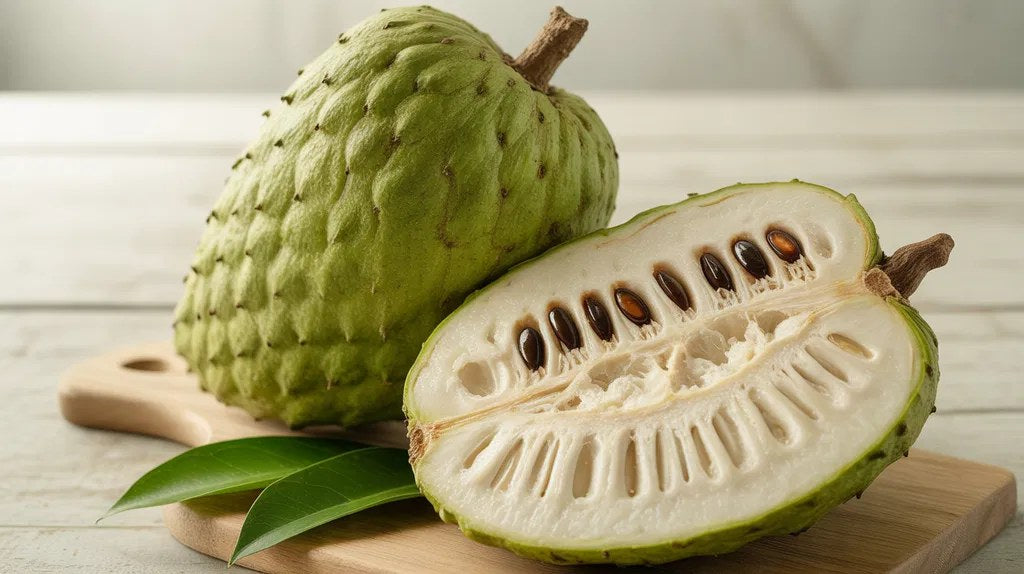
Soursop is the fruit of Annona muricata, a small evergreen tree from the tropical Americas and Caribbean. It's also known as graviola, guanábana and guyabano. The fruit is large and oval with a green, soft-spiked skin and juicy, fibrous white flesh studded with shiny black seeds. It tastes like a mix of pineapple, strawberry and citrus with a creamy, banana-like texture. It's mostly eaten fresh, blended into juices and smoothies, or made into ice cream and sorbet. Always remove the seeds and skin before eating, as they're not edible.
Key takeaways
- Same fruit, many names: soursop, graviola, guanábana, guyabano, corossol.
- Taste: sweet-tart and tropical, with a creamy, custardy texture.
- Eat the flesh only: discard the skin and the black seeds.
- In the UK: fresh fruit is rare; frozen pulp and canned nectar are easier to find.
- Be wary of health claims: soursop is a fruit, not a treatment for any disease.
Soursop at a glance
- Botanical name
- Annona muricata (custard apple family, Annonaceae)
- Other names
- Graviola, guanábana, guyabano, corossol, prickly custard apple
- Native to
- Tropical Central and South America and the Caribbean
- Size
- Usually 15–30cm long, often 1–4kg
- Flesh
- White, juicy, fibrous and creamy, in segments around black seeds
- Flavour
- Pineapple, strawberry and citrus, with a banana-like creaminess
- Per 100g raw flesh
- About 66 kcal and 17g carbohydrate; a source of vitamin C
- UK forms
- Occasional fresh fruit, frozen pulp, canned juice or nectar
What soursop is
Soursop grows on a small, fast-growing evergreen tree that thrives in hot, humid climates. Originally from the tropical Americas and the Caribbean, it's now grown across Africa, South and Southeast Asia and the Pacific. The fruit is technically a compound fruit: the white flesh forms in many segments, most holding a single seed.
The name "graviola" is common in Brazil and in the supplement industry; "guanábana" in Spanish-speaking countries; "guyabano" in the Philippines; and "corossol" in French-speaking Caribbean islands.
What it tastes like
Ripe soursop is fragrant, sweet and slightly tangy. Most people describe the flavour as a mix of pineapple and strawberry with sour citrus notes, and the texture as creamy and custard-like, a little like banana, but stringy where the fibres hold the segments together. Less ripe fruit is sharper and sourer, which is how it got its English name.
How soursop is eaten around the world
| Region | Popular uses |
|---|---|
| Caribbean | Soursop juice blended with milk or water, lime, nutmeg and vanilla; soursop punch; ice cream |
| Mexico and Central America | Agua fresca de guanábana; paletas (ice lollies); ice cream |
| South America | Juices and smoothies; champola (a blended soursop drink) in Peru; desserts |
| Philippines | Guyabano juice and shakes; eaten fresh with a spoon |
| Indonesia and Malaysia | Sirsak or durian belanda juice; added to fruit salads and drinks |
Because the flesh is soft and fibrous, it's rarely cooked. It's almost always eaten raw, chilled or frozen.
How to prepare a soursop
- Check it's ripe: it should give slightly when pressed, like a ripe avocado, and the skin may turn a duller, yellower green. Firm fruit will ripen at room temperature in a few days.
- Cut and open: slice it in half lengthways, or pull it apart with your hands once very ripe.
- Scoop: spoon out the white flesh and discard the skin and the central core.
- Remove every seed: pick out all the shiny black seeds. Don't eat or blend them.
- Use or freeze: eat it fresh, blend it with water or milk and strain for juice, or freeze the deseeded pulp in portions.
Finding soursop in the UK
- Fresh fruit: occasionally sold by Caribbean, Latin American and Asian grocers and some online exotic-fruit sellers. It's delicate and expensive, so availability is patchy.
- Frozen pulp: the easiest way to buy it. Look in the freezer section of Caribbean and Latin American shops for packs labelled guanábana or soursop pulp.
- Canned juice and nectar: widely sold in world food aisles. Check the label, as many are sweetened and only part soursop.
Soursop and its relatives
Soursop belongs to the Annona family, which includes several other custardy tropical fruits:
- Cherimoya (Annona cherimola): smaller, with smoother, scaly skin and a sweeter, less tangy flavour.
- Sugar apple or sweetsop (Annona squamosa): knobbly, segmented skin and very sweet flesh.
- Custard apple (Annona reticulata): reddish-brown skin and a mild, sweet flesh.
Soursop and health claims
Search for soursop or graviola online and you'll quickly find claims that it can treat or cure serious illnesses, including cancer. These claims aren't supported by evidence. Cancer Research UK states there is no evidence that graviola works as a cure for cancer, and UK and US regulators have taken action against sellers making such claims. Enjoy soursop as a fruit, and speak to a doctor about any health concerns.
Eating soursop sensibly
Soursop fruit is eaten widely as part of a normal diet. Like other Annona fruits, its seeds, leaves and other parts contain a natural compound called annonacin, which researchers are studying for possible effects on the nervous system. As a sensible precaution:
- Always remove the seeds and skin.
- Enjoy the fruit and juice in normal food amounts rather than in very large quantities every day.
- Don't use concentrated soursop products, teas or extracts in place of medical treatment, and talk to a GP or pharmacist if you're pregnant, have a medical condition or take regular medication.
Soursop FAQs
What is soursop?
Soursop is the fruit of Annona muricata, a tropical evergreen tree. It has a green, soft-spiked skin and creamy white flesh with black seeds, and a sweet-tart flavour.
Is soursop the same as graviola?
Yes. Graviola, guanábana, guyabano and corossol are all names for soursop, the fruit of Annona muricata.
What does soursop taste like?
Like a mix of pineapple and strawberry with sour citrus notes, with a creamy, custard-like texture similar to banana.
How do you eat soursop?
Cut it open, scoop out the white flesh, remove all the black seeds and eat it fresh, or blend it into juice, smoothies or ice cream.
Can you eat soursop seeds?
No. Discard the seeds and the skin, and eat only the white flesh.
Where can I buy soursop in the UK?
Fresh soursop is occasionally sold by Caribbean, Latin American and Asian grocers. Frozen pulp and canned juice are easier to find in world food shops.
Does soursop cure cancer?
No. There's no evidence that soursop or graviola cures or treats cancer. Cancer Research UK advises that it doesn't work as a cancer treatment.
How do I know when a soursop is ripe?
It gives slightly when pressed, like a ripe avocado, and the skin turns a duller, yellower green. Firm fruit ripens at room temperature in a few days.