

Ceylon vs Cassia Cinnamon: How to Tell Them Apart
Most "cinnamon" in UK supermarkets is cassia. Here's how Ceylon and cassia differ in taste, look and coumarin content, how to spot each one as sticks or powder, and how to buy genuine Ceylon cinnamon.
Quick answer
Ceylon cinnamon (Cinnamomum verum, "true cinnamon") comes mainly from Sri Lanka. It's light tan, sweet and delicate, its sticks are made of many thin, papery layers, and it contains only trace amounts of coumarin. Cassia (Cinnamomum cassia and related species) comes mainly from China, Indonesia and Vietnam. It's darker, spicier and stronger, its sticks are a single thick, hard layer, and it can contain much more coumarin, a natural flavour compound with a recommended daily limit. If a UK label just says "cinnamon", it's usually cassia.
Key takeaways
- Look at the stick: many thin layers means Ceylon; one thick curl means cassia.
- Check the label: genuine Ceylon names Cinnamomum verum or zeylanicum, or "Ceylon" and Sri Lanka.
- Coumarin is the big difference: cassia can contain hundreds of times more than Ceylon.
- Taste: Ceylon is sweet, floral and citrusy; cassia is bold, hot and woody.
- Both have a place: cassia is fine in normal cooking amounts; Ceylon suits everyday or larger use.
Ceylon vs cassia at a glance
| Ceylon cinnamon | Cassia cinnamon | |
|---|---|---|
| Species | Cinnamomum verum (also C. zeylanicum) | C. cassia, C. burmannii, C. loureiroi |
| Main origin | Sri Lanka; also southern India and Madagascar | China, Indonesia, Vietnam |
| Sticks | Many thin, papery layers rolled like a cigar; crumble easily | One thick, hard layer curled inwards; hollow tube |
| Colour | Light tan | Dark reddish-brown |
| Flavour | Sweet, delicate, floral, slightly citrusy | Strong, hot, spicy, slightly bitter |
| Coumarin | Trace amounts | Can be high |
| Price | Higher | Lower; the UK supermarket default |
Where cinnamon comes from
All cinnamon is the dried inner bark of trees in the Cinnamomum genus. Workers cut young shoots, peel away the outer bark and scrape off the thin inner bark, which curls into "quills" as it dries.
- Ceylon cinnamon takes its name from Ceylon, the old name for Sri Lanka, which still produces most of the world's supply. Its bark is peeled very thinly by hand, and the fine layers are rolled together into long quills.
- Cassia covers several related species. Chinese cassia (C. cassia), Indonesian or Korintje cassia (C. burmannii) and Vietnamese or Saigon cassia (C. loureiroi) are the main ones. The bark is thicker and is dried in a single layer.
How to tell them apart
Sticks
This is the easiest test. Look at the end of a stick:
- Ceylon: many thin, papery layers rolled inside each other, like a cigar or a rolled newspaper. It's light tan, and you can snap or crumble it with your fingers.
- Cassia: a single thick layer of bark that curls in from both sides, leaving a hollow tube. It's dark reddish-brown and very hard; you'd struggle to break it by hand.
Powder
Ground cinnamon is harder to judge. Ceylon powder is usually lighter and more tan, with a sweeter, softer smell. Cassia powder is darker and reddish, with a sharper, hotter smell. Colour alone isn't proof, so rely on the label and the seller.
The label
Genuine Ceylon cinnamon should say "Ceylon cinnamon", name Cinnamomum verum or Cinnamomum zeylanicum, or give Sri Lanka as the origin. "Cinnamon", "ground cinnamon" or "cassia" on its own usually means cassia.
Coumarin: the real difference
Coumarin is a natural flavour compound found in cassia, tonka beans, sweet woodruff and some other plants. It gives cassia part of its strong, sweet-hay aroma. In large amounts it can affect the liver in sensitive people, so food safety authorities set limits on it.
- Cassia often contains around 0.2% to 1% coumarin, and levels vary a lot between batches and species.
- Ceylon contains only trace amounts, typically hundreds of times less.
- The European Food Safety Authority has set a tolerable daily intake of 0.1mg of coumarin per kg of body weight. For a 60kg adult that's 6mg a day.
- Germany's Federal Institute for Risk Assessment (BfR) has advised that people who eat cinnamon in larger amounts every day, such as a teaspoon or more, may exceed this with strongly flavoured cassia, and that light users don't need to worry.
UK food law also limits coumarin added through ingredients such as cinnamon in some foods: for example 50mg per kg in traditional and seasonal baked goods that list cinnamon, 20mg per kg in breakfast cereals and 15mg per kg in other fine bakery wares.
In practice: a pinch of cassia in your baking isn't a concern. If you use cinnamon generously every day, in porridge, smoothies or drinks, Ceylon is the more sensible choice.
Taste and cooking
| Use | Better choice | Why |
|---|---|---|
| Cinnamon buns, mulled wine, gingerbread | Cassia | The bold flavour stands up to sugar and other spices |
| Custards, rice pudding, poached fruit | Ceylon | Its delicate, floral notes don't overpower |
| Curries, biryani, tagines | Either | Ceylon is traditional in South Asian cooking; cassia in Chinese five-spice |
| Daily porridge, coffee, smoothies | Ceylon | Lower coumarin for regular, generous use |
| Mexican hot chocolate, horchata | Ceylon | Traditionally made with soft-stick "canela" |
If you swap one for the other, start with less cassia than the recipe's Ceylon amount, as it's much stronger.
Buying genuine Ceylon cinnamon
- Check the species or origin on the label: Cinnamomum verum or zeylanicum, or Sri Lanka.
- Buy sticks if you can, so you can see the papery layers. Grind them yourself in a spice grinder for the freshest flavour.
- Be wary of very cheap "Ceylon" powder. Ceylon costs more to produce, and blends with cassia exist.
- Look for a batch number and best-before date, and buy smaller packs you'll use within a few months.
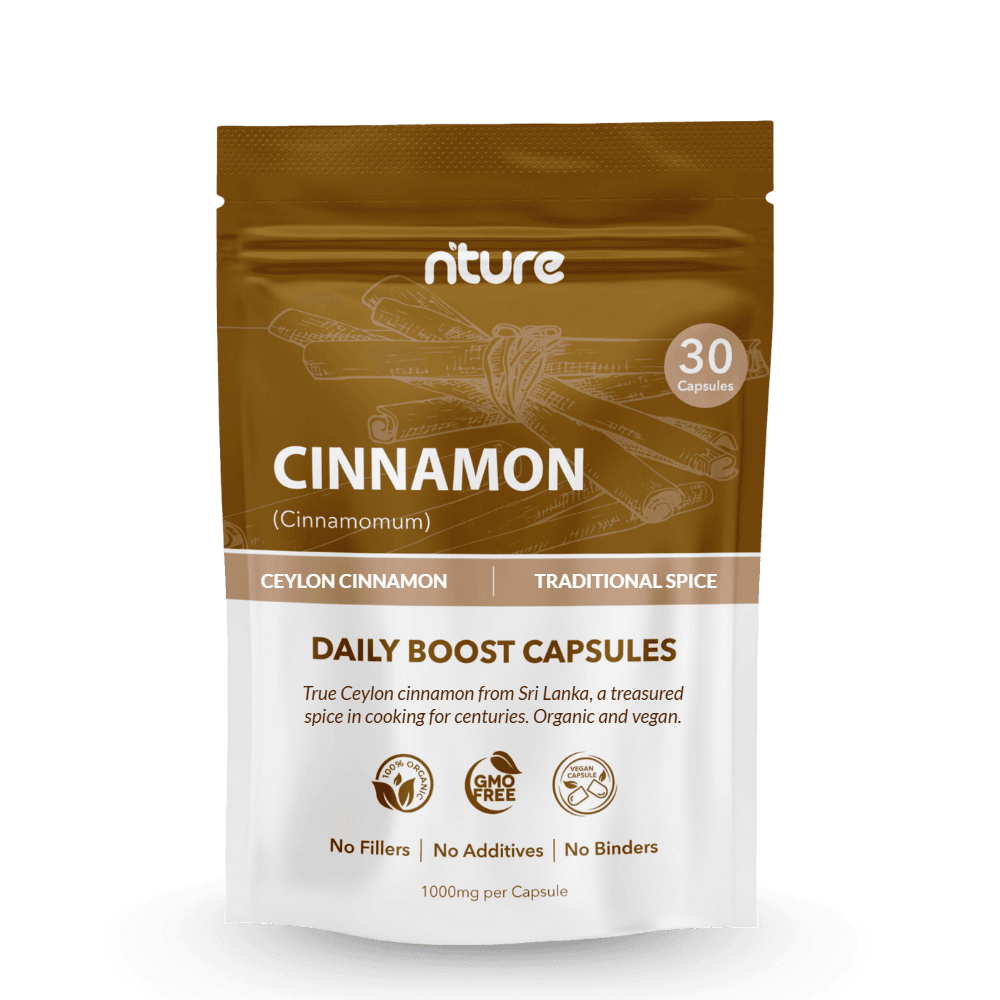
- For supplements, check that the label says Ceylon cinnamon or Cinnamomum verum, not just "cinnamon".
Ceylon cinnamon grades
Sri Lankan quills are graded by thickness. The finer the quill, the higher the grade and price.
- Alba: the finest and thinnest quills, the most prized grade.
- Continental: thin quills, graded C4 to C5 Special; the most common high-quality grade.
- Mexican: slightly thicker quills, popular in Latin America.
- Hamburg: the thickest quills, often used for grinding.
- Quillings and featherings: broken pieces and inner shavings, often used for powder.
Storage
Keep cinnamon in an airtight jar in a cool, dark cupboard. Sticks keep their flavour for a couple of years; powder fades faster, so use it within about six months for the best taste. If ground cinnamon has little smell when you rub it between your fingers, it's past its best.
Ceylon vs cassia FAQs
What is the difference between Ceylon and cassia cinnamon?
Ceylon cinnamon comes from Cinnamomum verum, mainly grown in Sri Lanka. It's lighter, sweeter and more delicate, with thin papery sticks and only trace coumarin. Cassia comes from related species grown in China, Indonesia and Vietnam. It's darker, stronger and can contain much more coumarin.
How can I tell if cinnamon is Ceylon or cassia?
Look at a stick: Ceylon has many thin, papery layers rolled together, while cassia is a single thick, hard layer curled into a tube. With powder, check the label for Ceylon, Cinnamomum verum or Sri Lanka.
Is supermarket cinnamon Ceylon or cassia?
Most cinnamon sold in UK supermarkets as just "cinnamon" or "ground cinnamon" is cassia. Ceylon is usually labelled as Ceylon cinnamon.
Why does coumarin matter?
Coumarin is a natural compound that can affect the liver in large amounts. EFSA has set a tolerable daily intake of 0.1mg per kg of body weight. Cassia can contain much more coumarin than Ceylon, which matters if you use a lot of cinnamon every day.
Is cassia cinnamon safe to eat?
Yes, in normal cooking amounts. The concern is regular, generous daily use, where the coumarin in cassia can add up. Ceylon is the better choice for heavy everyday use.
Does Ceylon cinnamon taste different?
Yes. Ceylon is sweeter, softer and slightly citrusy or floral. Cassia is hotter, spicier and more intense.
Why is Ceylon cinnamon more expensive?
The thin inner bark is peeled and rolled by hand, it grows mainly in one country, and yields are smaller than for cassia.
How long does cinnamon last?
Sticks keep their flavour for a couple of years in an airtight jar. Ground cinnamon is best used within about six months.