

Ethiopian vs Egyptian Black Seed Oil: What's the Difference?
Both come from the same plant, Nigella sativa. Here's how Ethiopian and Egyptian black seed oil really differ in taste, colour and quality markers, which claims to be sceptical of, and how to choose a good oil whatever the origin.
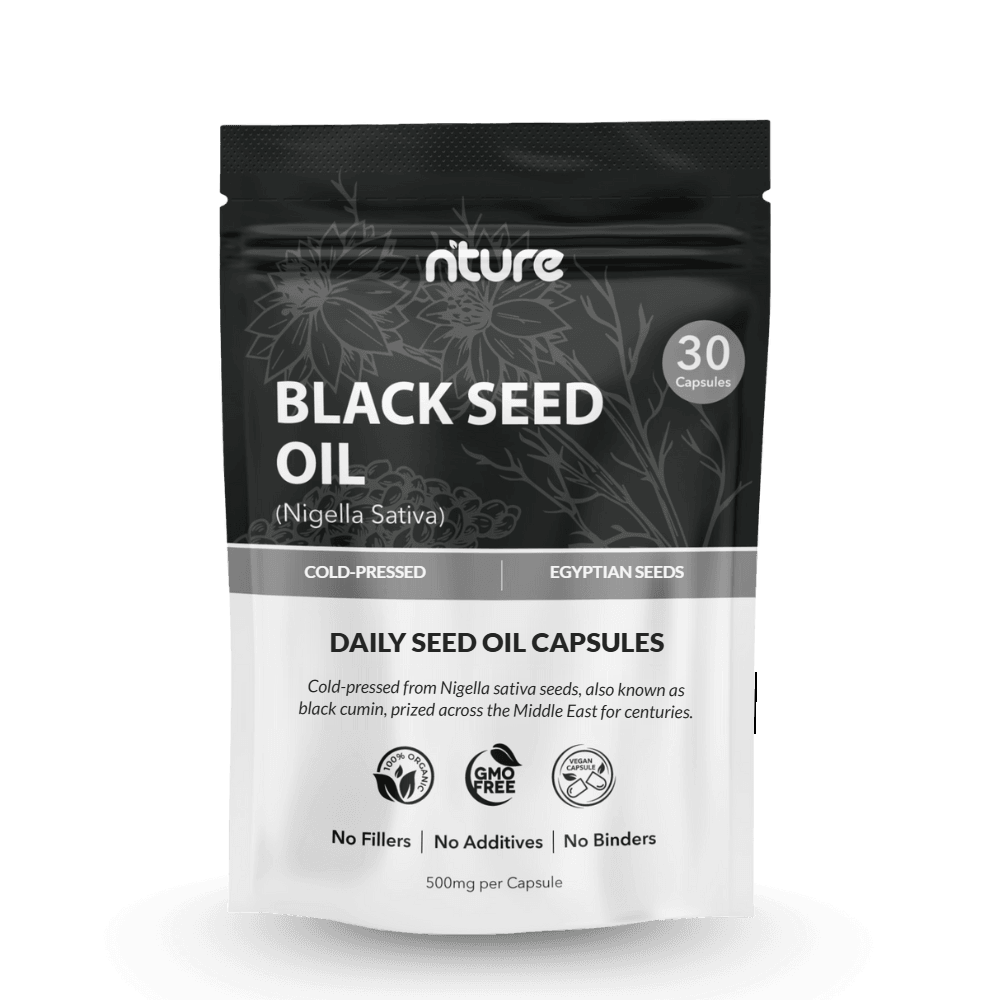
Quick answer
Ethiopian and Egyptian black seed oil are pressed from the same species, Nigella sativa. Ethiopian oil is often described as stronger, more peppery and slightly more bitter, while Egyptian oil is usually a little milder and smoother. Claims that one origin always has more thymoquinone (the compound brands use as a quality marker) aren't backed by consistent published data: levels vary more by harvest, pressing and storage than by country. Choose a cold-pressed, single-ingredient oil in dark packaging, from a named origin, ideally with a recent lab test.
Key takeaways
- Same plant: the difference is growing conditions and handling, not species.
- Taste differs: Ethiopian tends to be bolder; Egyptian tends to be gentler.
- Thymoquinone varies by batch: ask for a test result rather than trusting the country on the label.
- Processing matters most: cold-pressed, fresh and protected from light beats any origin claim.
- Capsules or oil: capsules avoid the strong taste; check whether the shell is gelatin or plant-based.
At a glance
| Ethiopian black seed oil | Egyptian black seed oil | |
|---|---|---|
| Plant | Nigella sativa | Nigella sativa |
| Where it's grown | Highland farms, often at altitude | Nile valley and delta farmland |
| Typical flavour | Strong, peppery, earthy, bitter finish | Milder, rounder, slightly nutty |
| Typical colour | Deep amber to dark brown | Golden amber to brown |
| Thymoquinone | Varies by batch; check the lab test | Varies by batch; check the lab test |
| Availability in the UK | Widely sold as a premium oil | The most common origin in UK shops |
| Typical price | About £10–£15 per 100ml | About £8–£13 per 100ml |
What black seed oil is
Black seed oil is pressed from the small, black, teardrop-shaped seeds of Nigella sativa, a flowering plant in the buttercup family. The seeds go by many names: black cumin, kalonji, habbatus sauda and, confusingly, "onion seeds" in some UK supermarkets. They aren't related to cumin, black sesame or onions.
The plant grows across North Africa, the Middle East and South Asia. Ethiopia, Egypt, India, Syria and Turkey are among the main producers, and Ethiopian and Egyptian oils are the two origins UK buyers see most often.
Ethiopian vs Egyptian: the real differences
Growing conditions
Ethiopian black seed is mostly grown by smallholders in the highlands, where cooler nights and a long growing season are often said to give a more concentrated flavour. Egyptian black seed is grown on irrigated farmland along the Nile, with a hot, dry climate and larger, more uniform harvests.
Taste and colour
This is where most people notice a difference. Ethiopian oil is commonly described as bolder, with a peppery bite and a lingering bitterness. Egyptian oil is usually a little gentler and rounder. Both are strong compared with everyday cooking oils, and the difference between two batches from the same country can be as big as the difference between countries.
Seed size
Ethiopian seeds are often described as slightly smaller. Seed size doesn't, on its own, tell you anything about oil quality.
The thymoquinone question
Thymoquinone (often shortened to TQ) is the compound most associated with black seed oil's sharp flavour and aroma, and brands often quote it as a quality marker. You'll see claims that Ethiopian oil "always" has more TQ than Egyptian oil. Be cautious:
- Published TQ levels vary widely between samples from the same country, depending on the seed lot, how fresh it is, how it's pressed and how the oil has been stored.
- Single-batch lab results published by UK sellers range from under 1% to around 3%, and the better sellers say a result applies only to the batch tested.
- "Standardised" figures such as 5% usually mean the oil has been concentrated or blended. That isn't the same as a plain cold-pressed oil.
- A number without a lab name and batch is marketing, not evidence.
If TQ matters to you, ask for a recent certificate of analysis from an independent lab. It's a far better guide than the country on the label.
Processing matters more than origin
- Cold-pressed vs solvent-extracted: cold-pressed oil is squeezed mechanically at low temperature. Cheaper oils can be extracted with solvents such as hexane. The label should say "cold-pressed".
- Filtered vs unfiltered: unfiltered oil is cloudier and may leave sediment. Filtered oil is clearer. Neither is wrong; it's a preference.
- Freshness: the oil's flavour and aroma fade with time, heat and light, whatever the origin.
- Packaging: dark glass bottles or opaque capsule pouches protect the oil from light.
How to choose a good black seed oil
- Named species and origin: "Nigella sativa" plus a country, not just "black seed".
- Cold-pressed: stated clearly on the label.
- Single ingredient: no carrier oils or flavourings, unless clearly declared.
- Dark packaging: amber or dark glass for oils, opaque packs for capsules.
- Batch number and best-before date: so you can trace it and judge freshness.
- Lab testing: a recent certificate showing TQ, plus contaminants such as PAHs and heavy metals, is a strong sign of a careful brand.
- Capsule shell: HPMC (plant-based) or gelatin. Bovine gelatin may not suit vegetarians or everyone who eats halal.
- Sensible claims: avoid sellers promising to cure or prevent illness. In the UK, food and supplements aren't allowed to make those claims.
Oil or capsules?
| Liquid oil | Capsules | |
|---|---|---|
| Taste | Strong, peppery and bitter | No taste when swallowed |
| Measuring | By teaspoon | Fixed amount per capsule |
| Uses | Food, dressings, skin and hair | Swallowed only |
| Storage | Fades once opened; keep dark and cool | Oil sealed inside each capsule |
| Best for | Cooking and people who like the flavour | Convenience and travel |
Using black seed oil in food
- Don't fry with it: heat dulls the flavour. Add it after cooking.
- Dressings: a few drops in olive oil with lemon and garlic.
- With honey: mixed into a spoonful of raw honey is a traditional way to soften the taste.
- Drizzled: over hummus, yoghurt dips, lentil soup or flatbreads.
- Seeds: the whole seeds are lovely toasted on naan, in pickles and in Bengali panch phoron spice mix.
Storage
Keep bottles tightly closed in a cool, dark cupboard, away from the cooker. Once opened, use the oil within a few months for the best flavour, or follow the label. A fridge slows down flavour loss. Capsules should be kept sealed in their pouch, away from heat and humidity.
Who should take care
Black seed is widely used in cooking, but concentrated oil and supplements aren't suitable for everyone. Avoid supplements if you're pregnant or breastfeeding, don't give them to children, and speak to a GP or pharmacist first if you take regular medication or are due to have surgery. Patch-test before using the oil on skin, as it can irritate.
Black seed oil FAQs
Is Ethiopian black seed oil better than Egyptian?
Not automatically. Both come from Nigella sativa. Ethiopian oil usually tastes stronger and Egyptian oil milder, but quality depends more on freshness, cold-pressing and storage than on the country of origin.
Does Ethiopian black seed oil have more thymoquinone?
Some batches do, but levels vary widely within each country depending on the seed lot, pressing and storage. Ask for a recent lab result rather than relying on origin.
What does Ethiopian black seed oil taste like?
Strong, peppery and earthy, with a bitter finish. Egyptian oil is similar but usually a little milder.
Is black seed the same as black cumin or kalonji?
Yes. Black seed, black cumin, kalonji and habbatus sauda all refer to Nigella sativa. It isn't related to ordinary cumin, black sesame or onions.
Should black seed oil be cold-pressed?
Yes. Cold-pressed oil is extracted mechanically at low temperature without solvents, which keeps more of its natural flavour and aroma.
Can I cook with black seed oil?
Use it as a finishing oil rather than for frying. Drizzle it over dips, soups, salads and flatbreads after cooking.
How should I store black seed oil?
In a sealed dark bottle in a cool cupboard or the fridge. Use it within a few months of opening for the best flavour.
Are black seed oil capsules vegan?
It depends on the shell. HPMC capsules are plant-based; softgels are often made with bovine gelatin. Check the ingredients.