

Organic Cacao Powder: A UK Buyer's Guide
How to choose organic cacao powder in the UK: what "raw", "cacao" and "alkalised" really mean on a label, how to check an organic code, why cadmium testing matters, and what you should expect to pay.
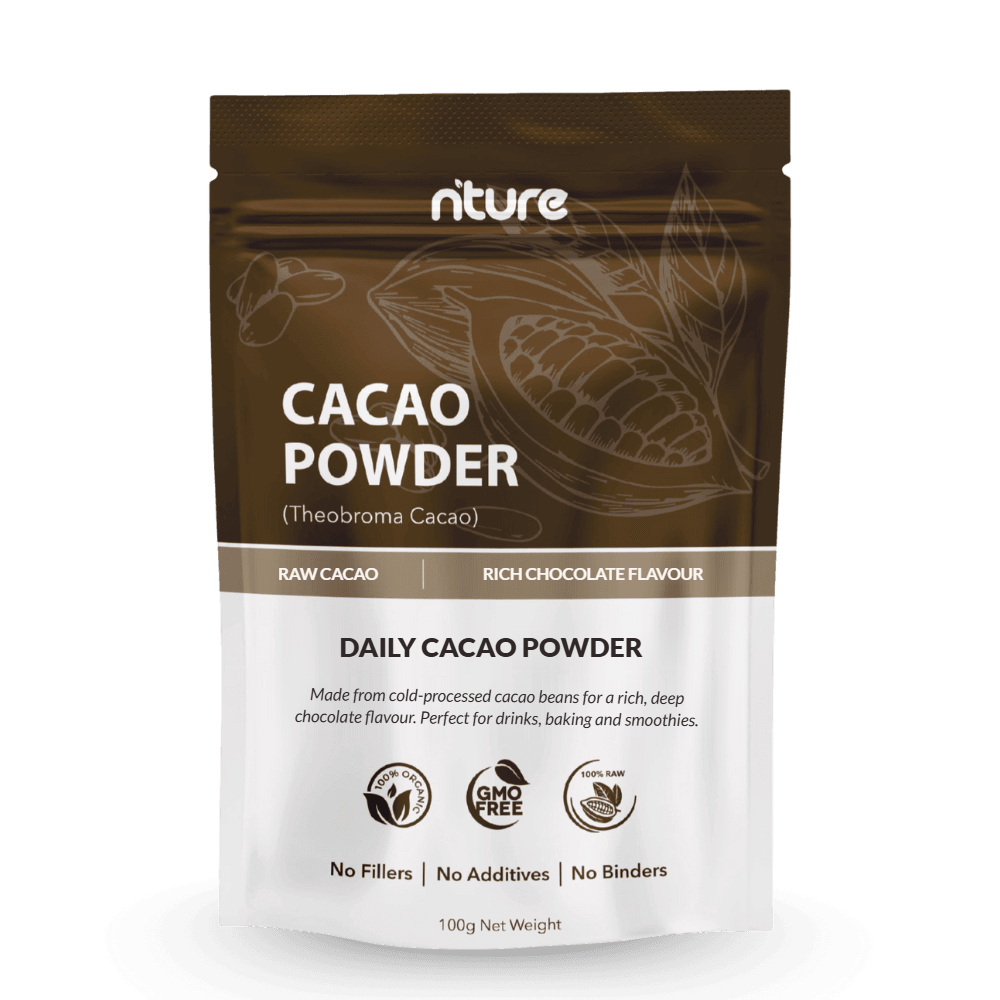
Quick answer
Good organic cacao powder has one ingredient, carries a UK organic control body code (such as GB-ORG-05) you can check, is non-alkalised if you want the fullest, fruitiest chocolate flavour, and comes from a brand that can show cadmium test results below the UK legal limit of 0.60 mg/kg. Words like "raw" and "cacao" aren't legally defined, so judge a powder by its label details, not its name. Expect to pay roughly £15–£45 per kg, with big savings on 500g and 1kg packs.
Key takeaways
- "Cacao" vs "cocoa": mostly a marketing difference. Processing matters more than the name.
- Organic is checkable: look for a GB-ORG code and search the certifier's directory.
- Alkalised changes the powder: darker, milder and less acidic, which affects baking.
- Cadmium is the hidden quality check: ask for a batch test, especially for Latin American cacao.
- Compare price per kg: small pouches can cost three to four times more per gram.
Organic cacao powder at a glance
- What it is
- Fermented, dried cacao beans, ground after most of the cocoa butter is pressed out
- Should contain
- Cacao (or cocoa) powder only
- Fat content
- Usually about 10–14g per 100g for UK organic powders
- Natural stimulants
- Around 2g theobromine and 0.2g caffeine per 100g of unsweetened cocoa powder
- UK cadmium limit
- 0.60 mg/kg for cocoa powder sold to consumers
- Organic proof
- A GB-ORG control body code on the pack
- Typical UK price
- About £15–£45 per kg, depending on pack size
- Keeps
- Usually 12–24 months unopened; store sealed, cool and dry
Cacao, cocoa and "raw": what the words mean
All cacao and cocoa powder starts the same way. Pods are harvested from the Theobroma cacao tree, the beans are fermented for several days, dried, then shelled and ground into a paste. Most of the fat (cocoa butter) is pressed out, and the remaining cake is milled into powder.
- "Cacao powder" is usually used for powder from beans that were dried at lower temperatures or only lightly roasted. In the UK it isn't a legal term, and some brands use "cacao" and "cocoa" for the same product.
- "Cocoa powder" traditionally means powder from roasted beans. Roasting gives a deeper, rounder chocolate flavour.
- "Raw" isn't defined in UK law either. Fermentation alone naturally warms the beans to around 45–50°C, so "raw" usually means the beans weren't roasted afterwards. If it matters to you, ask the brand for the processing temperatures.
Natural vs alkalised (Dutch-process) powder
This is the processing choice that changes the powder the most, and it's easy to miss on a label.
| Natural (non-alkalised) | Alkalised (Dutch-process) | |
|---|---|---|
| How it's made | Ground with no further treatment | Treated with an alkali such as potassium carbonate |
| Colour | Light to mid brown | Darker, sometimes almost black |
| Flavour | Bright, fruity, slightly bitter | Mellow, smooth, less acidic |
| Label clue | "Cacao powder" or "non-alkalised" | "Alkalised", "Dutch-process" or an acidity regulator listed |
| Baking | Reacts with bicarbonate of soda | Usually paired with baking powder |
Most organic "cacao" powders sold in the UK are natural. If a label doesn't say either way, ask.
The 9-point buyer's checklist
- One ingredient: the list should say cacao or cocoa powder and nothing else. Sugar, milk powder or flavourings make it a drinking chocolate mix.
- An organic code: look for "GB-ORG-" followed by a number, plus the certifier's name or logo. "100% organic" on its own isn't proof.
- Alkalised or not: check the label, especially if you bake.
- Origin: a named country or region (for example Peru, Dominican Republic, Ghana or Sierra Leone) shows the brand knows its supply chain.
- Cadmium testing: a brand should be able to share recent batch results.
- Fat content: check the nutrition panel. Around 10–14g per 100g is standard; higher-fat powders taste richer.
- Ethical sourcing: Fairtrade or a named direct-trade partner if that matters to you. It's separate from organic.
- Allergen statement: look for "may contain" warnings for nuts or milk if you have allergies.
- Packaging and dates: a resealable pouch or tub, a batch number and a clear best-before date.
How to check an organic code
In Great Britain, food can only be sold as organic if it's certified by an approved organic control body. Each body has a code that must appear on the pack.
- Find the code near the ingredients or nutrition panel, for example GB-ORG-05 (Soil Association Certification) or GB-ORG-02 (Organic Farmers & Growers).
- Check the certifier is on the UK government's list of approved organic control bodies.
- Search the certifier's directory for the brand or packer named on the label.
- Imported products may also carry an EU organic logo and a code from the country of origin.
If a powder says "organic" but shows no code anywhere, ask the brand which body certifies it before you buy.
Cadmium and lab testing
Cacao trees take up cadmium, a naturally occurring metal, from the soil. Levels vary by region and tend to be higher in some volcanic soils in Latin America. Because cocoa powder concentrates the bean's solids, it's one of the foods where cadmium is specifically regulated.
- The UK limit for cocoa powder sold to the final consumer, including in drinking chocolate, is 0.60 mg/kg.
- Ask for a certificate of analysis showing cadmium and lead for the current batch, with the lab's name and date.
- "Low cadmium" claims mean little without numbers. Look for a result, not a badge.
Organic certification is about farming methods and doesn't guarantee low cadmium, so this check matters for organic powders too.
What you should pay
Organic cacao powder prices vary hugely by pack size. Always compare the price per kilo.
| Pack size | Typical UK price per kg | Best for |
|---|---|---|
| 100–250g | £40–£75 | Trying a brand or occasional baking |
| 500g | £20–£35 | Regular hot cacao or smoothies |
| 1kg | £15–£25 | Daily use and baking |
| Bulk (5kg+) | £11–£15 | Cafés and bakers |
Single-origin and specialist "ceremonial" powders cost more. Very cheap organic powder is worth checking for a valid organic code and whether it's alkalised.
Using cacao powder
- Hot cacao: whisk 1–2 heaped teaspoons into warm milk or a plant drink with a little honey or maple syrup.
- Baking: natural cacao is acidic, so it works with bicarbonate of soda. If a recipe calls for Dutch-process cocoa, use baking powder or reduce the bicarbonate.
- Breakfast: stir into porridge, overnight oats, yoghurt or smoothies.
- Savoury: a teaspoon adds depth to chilli, mole and beef stews.
- Clumping: sift it, or mix it to a paste with a splash of liquid first.
Storage and shelf life
Keep cacao powder sealed in a cool, dry, dark cupboard, away from the cooker and kettle steam. Moisture makes it clump and dulls the flavour. Unopened, most powders carry a best-before date 12–24 months from packing. Once opened, use it within a few months for the best flavour and always reseal the pouch.
Who should take care
Cacao naturally contains caffeine and theobromine. A heaped teaspoon (about 5g) contains roughly 10mg of caffeine, much less than a cup of coffee, but it adds up. If you're pregnant, the NHS advises keeping caffeine below 200mg a day from all sources. Keep cacao and chocolate away from dogs and cats, as theobromine is toxic to them.
Organic cacao powder FAQs
What should I look for in organic cacao powder?
A single ingredient, a GB-ORG organic code you can verify, whether it's alkalised, a named origin, recent cadmium test results, and a resealable pack with a clear best-before date.
Is cacao powder the same as cocoa powder?
They come from the same beans. "Cacao" usually means lower-temperature processing and "cocoa" means roasted, but neither term is legally defined in the UK, so check the label details instead.
What does raw cacao powder mean?
Usually that the beans were fermented and dried but not roasted. Fermentation itself warms the beans to around 45–50°C, and "raw" isn't legally defined, so ask the brand how it's processed.
How do I know cacao powder is really organic?
Look for an organic control body code such as GB-ORG-05 on the pack, then search that certifier's directory for the brand or packer.
Why does cacao powder contain cadmium?
Cacao trees absorb cadmium naturally from the soil. The UK limit for cocoa powder sold to consumers is 0.60 mg/kg, and reputable brands test each batch.
Is alkalised cacao powder bad?
No, it's a processing choice. Alkalising makes the powder darker and milder. It does change how the powder behaves in baking and gives a different flavour from natural cacao.
Does cacao powder contain caffeine?
Yes, a small amount. A heaped teaspoon has roughly 10mg of caffeine, plus theobromine, a related natural compound.
How long does cacao powder last?
Usually 12–24 months unopened. Once opened, keep it sealed in a cool, dry cupboard and use it within a few months for the best flavour.